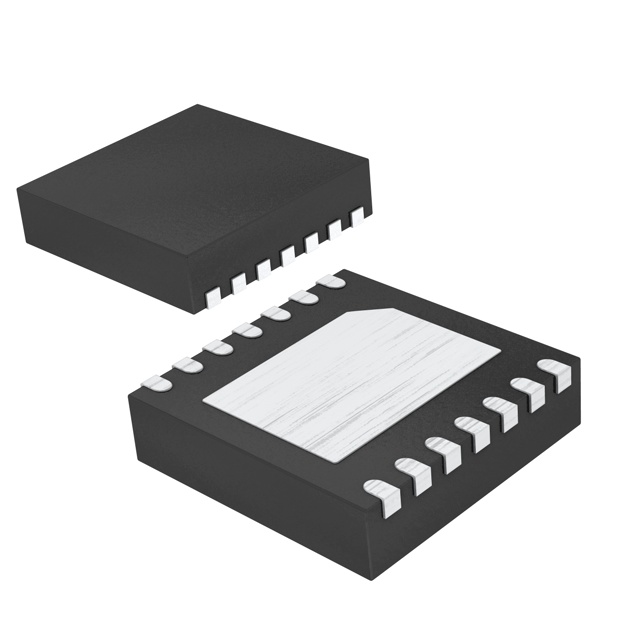
Key Specs
| Spec | Value | Condition | Source |
|---|---|---|---|
| Battery Chemistry | Lithium Ion/Polymer | Digi-Key | |
| Fault Protection | Over Current, Over Temperature, Over/Under Voltage, Short Circuit | Digi-Key | |
| Function | Fuel Gauge | Digi-Key | |
| Interface | 1-Wire | Digi-Key | |
| Mounting Type | Surface Mount | Digi-Key | |
| Number Of Cells | 1 | Digi-Key | |
| Operating Temperature Range | -40°C ~ 85°C (TA) | Digi-Key | |
| Package Case | 14-WFDFN Exposed Pad | Digi-Key | |
| Supplier Device Package | 14-TDFN (3x3) | Digi-Key |
When To Use
Use the MAX17313G+ when designing a compact, single-cell Lithium Ion or Lithium Polymer battery-powered device requiring integrated fuel gauge functionality with fault protection, such as wearable electronics or portable medical devices. The device’s 1-Wire interface and surface mount 14-WFDFN package make it ideal for space-constrained applications operating within -40°C to 85°C ambient temperature.
Do not use the MAX17313G+ in multi-cell battery packs or applications requiring high-current measurement beyond the limits of a single cell configuration. In such cases, consider multi-cell fuel gauge ICs with dedicated multi-cell support and higher current sensing capability.
When Not To Use
-
Multi-cell battery packs (>1 cell series): The MAX17313G+ supports only a single cell; multi-series battery management requires a multi-phase buck controller or dedicated multi-cell fuel gauge to prevent cell imbalance and overvoltage damage.
-
Systems requiring galvanic isolation between battery and load: Since this part lacks isolation capability, use an isolated flyback topology controller to meet safety and noise immunity requirements in medical or industrial equipment.
-
Applications needing switching frequency above 500 kHz to minimize inductor size: This part is not designed for high-frequency operation; a high-frequency buck controller should be chosen to avoid excessive electromagnetic interference and inefficient switching losses.
Application Notes
The MAX17313G+ monitors battery current through the current sense resistor placed in series with the single Lithium Ion/Polymer cell; this node switches dynamically and requires the smallest possible loop area to minimize noise and improve measurement accuracy. The 1-Wire interface pin is noise-sensitive and must be routed carefully with the recommended 4.7 kΩ pull-up resistor to ensure reliable communication.
Due to the low power dissipation typical at the maximum operating temperature of 85°C ambient, a heatsink is generally not required when the device is mounted in its 14-WFDFN exposed pad package with proper PCB thermal vias. However, ensure adequate PCB thermal design to maintain device junction temperature within safe limits under worst-case load conditions.
Gotchas
-
Incorrect or missing current sense resistor:
If the engineer omits the current sense resistor or selects one with incorrect resistance or power rating, the device cannot accurately measure battery current, leading to erroneous fuel gauge readings and potential failure to detect over-current faults.
Fix: Use a precision low-ohmic resistor sized according to the expected current range and power dissipation, placed close to the battery terminal. -
Improper 1-Wire interface pull-up resistor:
Using a pull-up resistor value significantly different from the recommended 4.7 kΩ, or failing to include it, can cause communication errors on the 1-Wire bus, resulting in intermittent or failed data transfer.
Fix: Include a 4.7 kΩ pull-up resistor on the 1-Wire line to VDD as specified. -
Neglecting temperature sensing:
Without a thermistor or temperature sensor connected, the device cannot perform over-temperature fault protection, potentially allowing battery damage or unsafe conditions during high temperature operation.
Fix: Integrate a temperature sensor on the temperature sensing pin to enable proper thermal monitoring.