LM2596T-ADJ/NOPB vs. LM2596T-ADJ/LF02: A Practical Comparison
Quick verdict: For high-volume production runs where absolute lowest component cost is paramount, the LM2596T-ADJ/NOPB is the clear winner. However, if you’re prototyping, or need a slightly more consistent performance profile across manufacturing variations, the LM2596T-ADJ/LF02’s tighter internal tolerances justify the slightly higher cost.
Spec Comparison Table
| Spec | LM2596T-ADJ/NOPB | LM2596T-ADJ/LF02 | Notes |
|---|---|---|---|
| function | Step-Down | Step-Down | Identical. |
| output_configuration | Positive | Positive | Identical. |
| topology | Buck | Buck | Identical. |
| output_type | Adjustable | Adjustable | Identical. |
| number_of_outputs | 1 | 1 | Identical. |
| input_voltage_min | 4.5V | 4.5V | Identical. |
| input_voltage_max | 40V | 40V | Identical. |
| output_voltage_min | 1.2V | 1.2V | Identical. |
| output_voltage_max | 37V | 37V | Identical. |
| output_current_max | 3A | 3A | Identical. |
| switching_frequency_typ | 150kHz | 150kHz | Identical. |
| synchronous_rectifier | No | No | Identical. |
| operating_temperature_range | -40°C ~ 125°C (TJ) | -40°C ~ 125°C (TJ) | Identical. |
| mounting_type | Through Hole | Through Hole | Identical. |
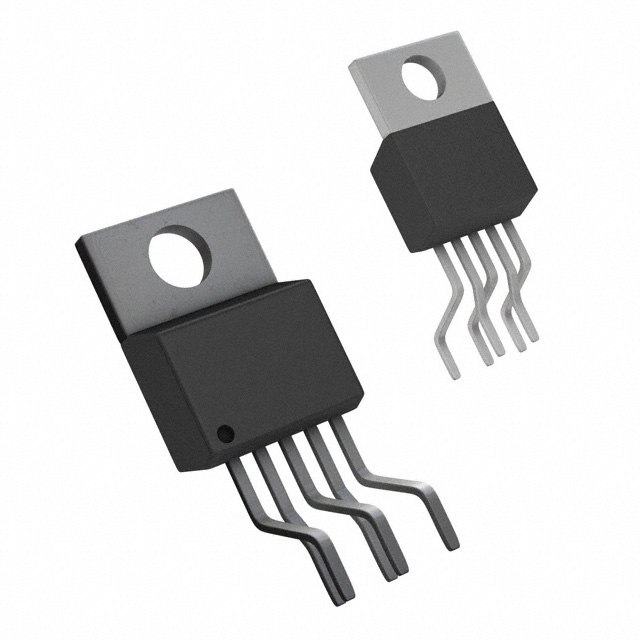
| package_case | TO-220-5 Formed Leads | TO-220-5 Formed Leads | Identical. |
| supplier_device_package | TO-220-5 | TO-220-5 | Identical. |
Design Trade-offs
The most significant difference between these parts lies in their internal manufacturing tolerances and the resulting impact on performance consistency. The “NOPB” designation (Non-Pb) indicates a focus on minimizing cost, which often translates to looser tolerances on internal components. This can manifest as slightly wider variations in output voltage and switching frequency across different units, and potentially a broader range of efficiency curves depending on the load and input voltage. The “LF02” designation implies a higher level of quality control and tighter component matching, leading to a more consistent performance profile.
Efficiency curves will likely show similar trends with both parts, but the LF02 will exhibit a smaller spread of efficiency values across different manufacturing lots. This is crucial in applications where consistent power delivery is critical, such as battery chargers or precision power supplies. The difference is unlikely to be dramatic – perhaps 1–2% variation at higher currents – but it’s a factor in high-volume production.
Thermal considerations are largely identical due to the identical package and power dissipation characteristics. Both parts require adequate heatsinking at higher output currents, and layout considerations to minimize parasitic inductance are equally important for both. Gate drive requirements are also the same, as the core IC functionality is unchanged. However, the slight variations in switching frequency with the NOPB part might necessitate minor adjustments to external component selection during prototyping.
Layout sensitivity is a general concern with the LM2596 family. Both parts will benefit from careful attention to minimizing loop areas and using ground planes to reduce EMI. The looser tolerances of the NOPB might slightly amplify the impact of layout variations, requiring more iterations to achieve optimal performance.
Use-case Fit
Choose LM2596T-ADJ/NOPB when…
- You are designing a high-volume, cost-sensitive product, such as a consumer electronics device where minor variations in output voltage are acceptable.
- Your design incorporates robust feedback mechanisms to compensate for variations in component performance.
- You are prototyping a design and need to minimize initial component costs to accelerate the development process.
- You are building a simple power supply for a non-critical application, such as powering a small LED array.
- You are operating at a constant input voltage and load, minimizing the impact of component variations.
Choose LM2596T-ADJ/LF02 when…
- You are designing a precision power supply for a sensitive application, such as a medical device or instrumentation.
- You require a consistent output voltage across a wide range of input voltages and load currents.
- You are building a battery charger where precise voltage regulation is essential for safety and performance.
- You are prototyping a design and want to minimize the risk of performance variations due to component tolerances.
- You are designing a system where multiple power modules will be operating in parallel and require tightly matched performance.
Drop-in Compatibility
Based on the provided data, both parts are pin-compatible and footprint-compatible. They use the same TO-220-5 package. However, due to the potential for slightly different internal component values and tolerances, substituting one for the other could require minor adjustments to external components or feedback network to achieve the desired output voltage and regulation. Thorough testing is recommended after substitution.
Alternatives to Consider
- LM2596S-ADJ: Offers a smaller package size (SOIC-8) if board space is a major constraint, but with slightly reduced power handling capabilities.
- TPS5430: A synchronous buck regulator offering higher efficiency and improved performance, but at a higher cost and increased complexity.
- LM317: A simpler, adjustable linear regulator suitable for lower power applications where efficiency is less critical.