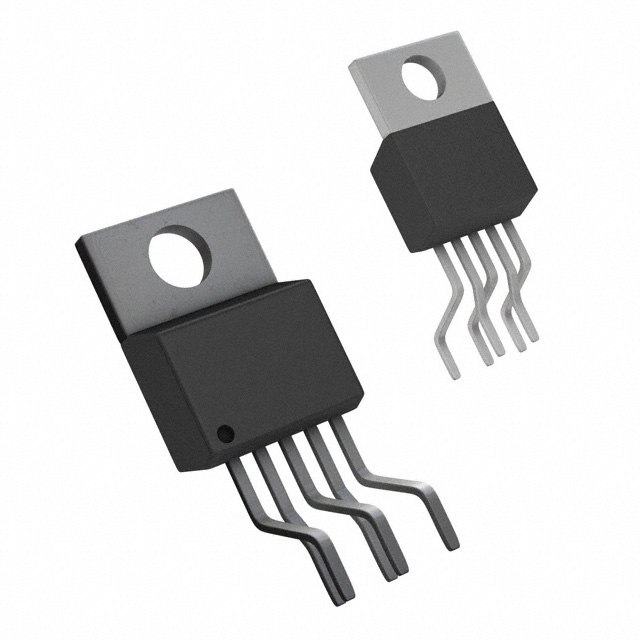
LM2596T-ADJ/NOPB vs. LM2596S-ADJ/NOPB: A Practical Comparison
The LM2596 family remains a workhorse for simple, cost-sensitive buck conversions. For hobbyist projects and low-volume production where manual assembly is common, the LM2596T-ADJ/NOPB’s through-hole package is a clear winner. However, if you’re designing a product for automated assembly and require a smaller footprint, the LM2596S-ADJ/NOPB’s surface mount package offers significant advantages.
Spec Comparison Table
| Spec | LM2596T-ADJ/NOPB | LM2596S-ADJ/NOPB | Notes |
|---|---|---|---|
| Function | Step-Down | Step-Down | Identical |
| Output Configuration | Positive | Positive | Identical |
| Topology | Buck | Buck | Identical |
| Output Type | Adjustable | Adjustable | Identical |
| Number of Outputs | 1 | 1 | Identical |
| Input Voltage Min | 4.5V | 4.5V | Identical |
| Input Voltage Max | 40V | 40V | Identical |
| Output Voltage Min | 1.2V | 1.2V | Identical |
| Output Voltage Max | 37V | 37V | Identical |
| Output Current Max | 3A | 3A | Identical |
| Switching Frequency Typ | 150kHz | 150kHz | Identical |
| Synchronous Rectifier | No | No | Identical |
| Operating Temperature Range | -40°C ~ 125°C | -40°C ~ 125°C | Identical |
| Mounting Type | Through Hole | Surface Mount | Significant difference – impacts assembly and PCB layout. |
| Package Case | TO-220-5 Formed Leads | TO-263-6, D2PAK (5 Leads + Tab), TO-263BA | Impacts footprint and thermal performance. |
| Supplier Device Package | TO-220-5 | TO-263 (DDPAK-5) | Same as Package Case. |
Design Trade-offs
The most significant difference lies in the package. The TO-220-5 package of the LM2596T-ADJ/NOPB is well-suited for manual prototyping and low-volume production. It simplifies initial testing and modification, as components can be easily replaced or added. However, the larger footprint of the TO-220-5 increases board area and can complicate high-density designs. Furthermore, the exposed tab on the LM2596T-ADJ/NOPB requires careful attention to thermal management. Improper grounding or insufficient heatsinking can lead to thermal runaway.
The LM2596S-ADJ/NOPB, with its TO-263/D2PAK footprint, offers a smaller footprint, essential for compact designs and automated assembly. This reduction in size comes at a cost: thermal performance can be more challenging. The smaller package has less surface area for heat dissipation, requiring more careful PCB layout and potentially the use of thermal vias to conduct heat away from the IC. The exposed tab on the LM2596S-ADJ/NOPB also needs to be properly connected to ground or a heat sink for optimal performance.
Efficiency curves for both parts are essentially identical given the same external components. The primary difference in efficiency will be due to differences in PCB trace resistance and thermal performance. The larger footprint of the LM2596T allows for thicker traces, reducing conduction losses. However, a well-designed PCB with thermal vias can mitigate this advantage for the LM2596S. Gate drive requirements are the same; both parts rely on external discrete components for gate driving.
Layout sensitivity is higher for the LM2596S-ADJ/NOPB due to the smaller package and potential for increased thermal density. Careful attention must be paid to minimizing parasitic inductance and ensuring adequate copper area for heat dissipation.
Cost at volume is likely to be slightly lower for the LM2596T-ADJ/NOPB due to simpler manufacturing processes associated with through-hole components.
Use-Case Fit
Choose LM2596T-ADJ/NOPB when…
- You’re building a prototype or hobby project and ease of assembly is paramount.
- Your product volume is low (less than 500 units) and manual assembly is acceptable.
- Board space is not a critical constraint.
- You need to easily modify or replace components during testing.
- You are comfortable managing the thermal performance of a TO-220 package, including proper grounding and heatsinking.
Choose LM2596S-ADJ/NOPB when…
- You’re designing a compact product where board space is limited.
- Your product requires automated assembly (pick-and-place).
- You need a smaller footprint for aesthetic reasons or to fit within a specific enclosure.
- You are comfortable with the increased layout complexity required for surface mount components.
- You are willing to invest in PCB design techniques (thermal vias, thicker copper) to manage thermal performance.
Drop-in Compatibility
Pin compatibility is yes, the pinout is identical. Footprint compatibility is no. The TO-220-5 and TO-263/D2PAK footprints are significantly different. Substituting one for the other requires redesigning the PCB. If you attempt to use the LM2596S in a TO-220 footprint, the component will overhang the board, which can lead to mechanical failures. Similarly, trying to put the LM2596T in a D2PAK footprint will prevent proper soldering and create a weak mechanical connection.
Alternatives to Consider
- LM2596-ADJ: A slightly older version, functionally identical, often available at a lower cost.
- TPS5430: A synchronous buck converter offering higher efficiency, but at a higher cost and complexity.
- LM2576: An older, lower-performance alternative if cost is the absolute primary concern.