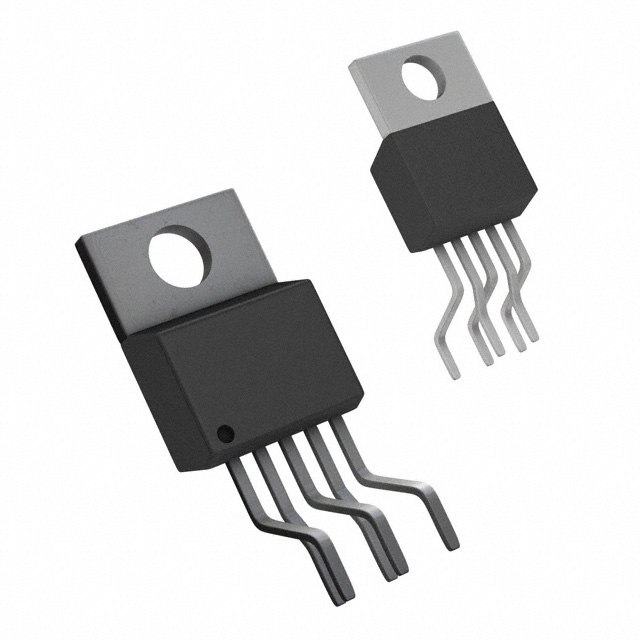
LM2596T-ADJ/NOPB vs. LM2596S-5.0/NOPB: A Practical Comparison
Quick verdict: For applications requiring a variable output voltage to match a wide range of system needs, the LM2596T-ADJ/NOPB is the clear winner. However, if your design absolutely needs a fixed 5V output and you’re optimizing for lowest BOM cost and smallest footprint, the LM2596S-5.0/NOPB is a reasonable choice, accepting the limitations of a fixed output.
Spec Comparison Table
| Spec | LM2596T-ADJ/NOPB | LM2596S-5.0/NOPB | Notes |
|---|---|---|---|
| Function | Step-Down | Step-Down | Identical |
| Output Configuration | Positive | Positive | Identical |
| Topology | Buck | Buck | Identical |
| Output Type | Adjustable | Fixed | Key difference – dictates design flexibility |
| Number of Outputs | 1 | 1 | Identical |
| Input Voltage Min | 4.5V | 4.5V | Identical |
| Input Voltage Max | 40V | 40V | Identical |
| Output Voltage Min | 1.2V | 5V | LM2596T-ADJ offers a much wider output range. |
| Output Voltage Max | 37V | - | LM2596T-ADJ offers a much wider output range. |
| Output Current Max | 3A | 3A | Identical |
| Switching Frequency Typ | 150kHz | 150kHz | Identical |
| Synchronous Rectifier | No | No | Identical |
| Operating Temperature Range | -40°C ~ 125°C (TJ) | -40°C ~ 125°C (TJ) | Identical |
| Mounting Type | Through Hole | Surface Mount | Significant difference impacting PCB layout and assembly. |
| Package Case | TO-220-5 Formed Leads | TO-263-6, D2PAK (5 Leads + Tab), TO-263BA | Impacts footprint and thermal performance. |
| Supplier Device Package | TO-220-5 | TO-263 (DDPAK-5) | Impacts footprint and thermal performance. |
Design Trade-offs
The most significant difference is the adjustable vs. fixed output. The LM2596T-ADJ provides design flexibility, allowing you to adapt to varying system voltage requirements. However, this flexibility comes at the cost of requiring external feedback components (resistors, op-amp) which add complexity to the design and increase BOM cost. The fixed output of the LM2596S-5.0 simplifies the design, eliminating the need for external feedback.
The package difference (Through Hole vs. Surface Mount) also introduces meaningful trade-offs. The TO-220 package of the LM2596T-ADJ is less thermally efficient than the smaller footprint surface mount options of the LM2596S-5.0. This necessitates careful consideration of heatsinking or airflow in designs using the T-ADJ version, particularly at higher output currents. The surface mount options of the S-5.0 allow for more compact PCB layouts and potentially better thermal performance due to increased surface area.
Gate drive requirements are similar between the two parts, as both operate at 150kHz and lack synchronous rectification. However, the TO-220 package of the LM2596T-ADJ will generally exhibit slightly higher parasitic inductance, potentially leading to slightly more ringing on the gate drive signal, which may require careful layout techniques to mitigate.
Layout sensitivity is generally moderate for both parts, typical of older buck regulator designs. However, the need for external feedback components with the LM2596T-ADJ necessitates careful attention to component placement and routing to minimize noise and ensure stability.
Use-case Fit
Choose LM2596T-ADJ/NOPB when…
- You need a variable output voltage: Powering a microcontroller with a fluctuating supply voltage, where the optimal operating voltage changes based on load conditions.
- You’re designing a configurable power supply: A universal power adapter where the output voltage needs to be selectable by the user.
- You need to power multiple devices with different voltage requirements: A single power supply board powering both a 3.3V and a 5V device.
- You’re prototyping a design: The adjustable output allows for easy experimentation and optimization of the output voltage.
- You’re comfortable with a larger footprint and through-hole assembly: The TO-220 package is simpler for hobbyist projects or designs where surface mount is not required.
Choose LM2596S-5.0/NOPB when…
- You absolutely require a fixed 5V output: Powering a legacy device that specifically requires 5V.
- You’re optimizing for lowest BOM cost: Eliminating the external feedback components reduces the total component count.
- You’re prioritizing a smaller PCB footprint: The surface mount package allows for a more compact design.
- You’re designing a high-volume product where simplicity is paramount: Fewer components and a simpler design reduce manufacturing costs and potential failure points.
- You’re working with an existing design that already uses the S-5.0: Minimizing changes reduces risk and development time.
Drop-in Compatibility
Pin compatibility is not guaranteed. While the pinout is similar, the function of each pin may differ between the adjustable and fixed versions. Footprint compatibility is also unlikely due to the different package types. Substituting one part for the other requires significant PCB layout changes and a complete redesign of the feedback network (for the T-ADJ). Thorough analysis and testing are absolutely necessary before attempting a substitution.
Alternatives to Consider
- LM2596S-3.3/NOPB: Similar to the S-5.0, but provides a fixed 3.3V output.
- TPS54331: A more modern, synchronous buck regulator with higher efficiency and a smaller footprint.
- LM2576: An older, less efficient alternative with a similar pinout, but generally not recommended for new designs.