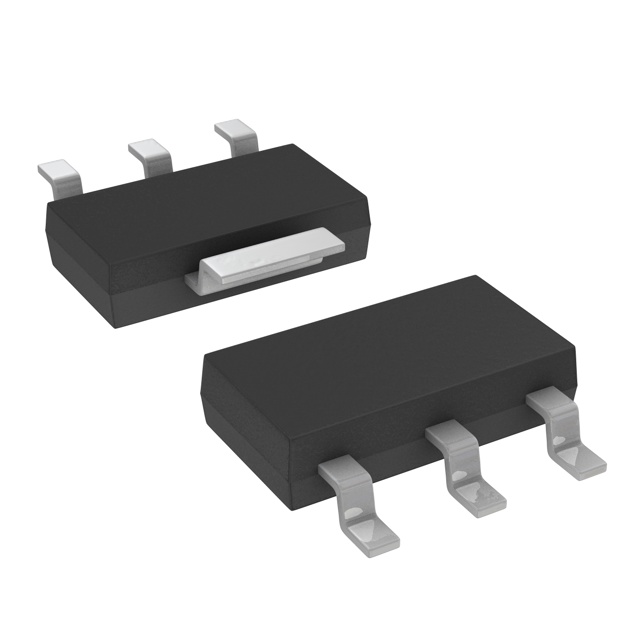
Key Specs
| Spec | Value | Condition | Source |
|---|---|---|---|
| Control Features | - | Digi-Key | |
| Current Quiescent IQ | 10 mA | Digi-Key | |
| Input Voltage (Max) | 15V | Digi-Key | |
| Mounting Type | Surface Mount | Digi-Key | |
| Number Of Regulators | 1 | Digi-Key | |
| Operating Temperature Range | 0°C ~ 125°C | Digi-Key | |
| Output Configuration | Positive | Digi-Key | |
| Output Current (Max) | 800mA | Digi-Key | |
| Output Type | Fixed | Digi-Key | |
| Output Voltage (Max) | - | Digi-Key | |
| Output Voltage (Min) | 3.3V | Digi-Key | |
| Package Case | TO-261-4, TO-261AA | Digi-Key | |
| Protection Features | Over Current, Over Temperature | Digi-Key | |
| Psrr | 75dB (120Hz) | Digi-Key | |
| Supplier Device Package | SOT-223 | Digi-Key | |
| Voltage Dropout (Max) | 1.2V @ 800mA | Digi-Key |
When To Use
-
5V → 3.3V @ 800mA: The fixed 3.3V output with an 800mA max current suits powering moderate loads from a 5V rail. The 1.2V dropout voltage at full load ensures regulation even when input sags slightly under load, preventing brownout. Switching regulators might fail here with EMI or require complex BOMs, and linear regulators with lower current ratings risk thermal shutdown.
-
12V automotive accessory @ 500mA: The 15V max input rating and rugged thermal protection allow use directly from the 12V vehicle supply, handling load dump and transient spikes. The over-temperature and over-current features prevent latch-up and thermal runaway under harsh conditions, unlike simple LDOs without protection that can self-destruct.
-
3.3V digital logic rail on a PCB with limited cooling: The TO-261 package and 10mA quiescent current balance thermal and efficiency needs for moderate current loads with limited board area. Switching solutions with external FETs risk shoot-through from poor gate drive in compact layouts, while linear regulators with higher dropout voltage might dissipate excessive heat.
When Not To Use
-
Battery-powered sensor node with μA sleep currents: The 10mA quiescent current is too high and will drain batteries rapidly. Use a low-IQ PFM buck instead to achieve μA-level standby current.
-
Powering >1.5A loads: The 800mA max output current rating is insufficient and risks device overheating or triggering over-current shutdown. Use a multi-phase buck controller for higher current capacity with balanced thermal loading.
-
Input-to-output differential below 1V with noise-sensitive analog circuitry: The 1.2V dropout voltage at full load disqualifies this LDO for low-dropout operation, and noise from the linear pass element may be problematic. Use a low-dropout LDO regulator designed specifically for low voltage differential and low output noise.
Application Notes
-
The input and output capacitors must be placed close to the regulator pins to minimize parasitic inductance and ensure stability; the datasheet recommends a low-ESR output capacitor of at least 10µF.
-
the Ground pin is the noise-sensitive reference node; keep the ground return path low impedance and separate from noisy power grounds to avoid output voltage ripple and instability.
-
The SW node designation does not apply as this is a linear regulator, but thermal conduction through the exposed tab must be soldered to a PCB copper area or heatsink for effective heat dissipation.
-
Avoid routing high-current traces near the feedback pin to prevent injected noise and voltage offsets.
-
The device should not be used in circuits where input voltage can exceed 15V, including transient spikes, to avoid irreversible damage.
Gotchas
-
[Minimum Load Current Assumption]: Designers often assume the regulator will start and regulate with zero load. The internal reference and error amplifier require a minimum load current to maintain regulation; otherwise, output voltage can rise above 3.3V or oscillate.
Fix: Add a minimum load resistor of ~10Ω on the output during startup and light load conditions. -
[Thermal Derating Not Obvious from Max Current]: The 800mA max current rating applies only if proper thermal management is in place. On a small PCB without adequate copper area or heatsinking, thermal shutdown can occur well below 800mA, causing intermittent output dropout.
Fix: Measure junction temperature during worst-case load and ensure PCB copper area matches datasheet thermal guidelines. -
[Output Capacitor ESR Impact]: Using a high-ESR capacitor on the output can cause output voltage oscillations and instability despite meeting capacitance specs. This is not apparent from the basic spec table but is critical for stable operation.
Fix: Use low-ESR tantalum or ceramic capacitors specified by the datasheet. -
[Input Voltage Transients Above Max Rating]: Certain transient events (load dump, inductive kickback) can cause input voltage spikes above 15V, damaging the device even if nominal input is within range. This can cause sudden device failure without gradual warning.
Fix: Add transient voltage suppression components or input clamping circuits to keep voltage below 15V.