Key Specs
| Spec | Value | Condition | Source |
|---|---|---|---|
| Current Startup | 30 µA | Digi-Key | |
| Mode | Discontinuous (Transition) | Digi-Key | |
| Mounting Type | Surface Mount | Digi-Key | |
| Operating Temperature Range | -25°C ~ 125°C | Digi-Key | |
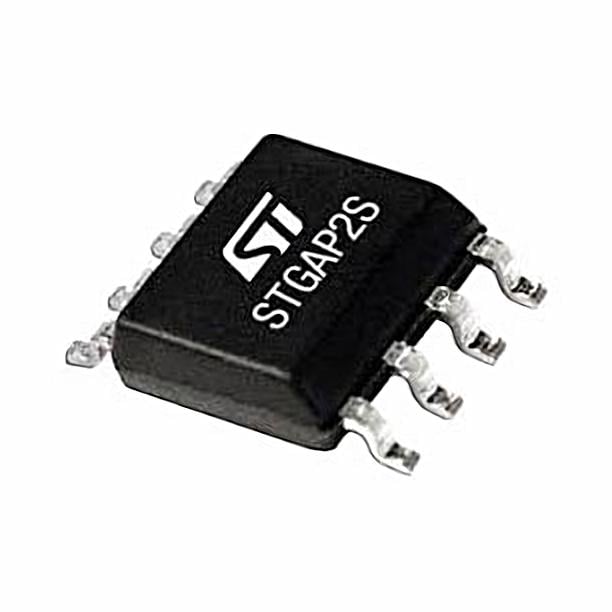
| Package Case | 8-SOIC (0.154”, 3.90mm Width) | Digi-Key | |
| Supplier Device Package | 8-SOIC | Digi-Key | |
| Switching Frequency (Typ) | - | Digi-Key | |
| Voltage Supply | 10.5V ~ 22.5V | Digi-Key |
When To Use
-
12V automotive accessory supply @ 3A: The wide supply voltage range of 10.5V to 22.5V covers the typical automotive 12V battery variations including cold crank and load dump conditions. Using a synchronous buck controller instead risks shoot-through or latch-up under transient input voltages exceeding the controller’s max rating.
-
Battery-powered industrial sensor rail @ 5V, 1A: The low startup current of 30 µA allows clean startup in discontinuous conduction mode without excessive inrush current stressing the battery. A multi-phase buck controller designed for high current would suffer thermal runaway and efficiency loss at this low load range.
-
LED driver from 15V to 18V bus @ 700mA: The 8-SOIC package fits tight board space, and the discontinuous conduction mode operation reduces switching losses at moderate currents. Using a high-frequency buck controller here would cause excessive EMI and require complex layout to avoid erratic switching node ringing.
When Not To Use
-
>10A power supply rail: The package and internal design limit current capability; this disqualifies it based on current rating. Use a multi-phase buck controller instead to share current and reduce thermal stress.
-
Battery-powered sensor needing ultra-low quiescent current: The startup current of 30 µA is too high for multi-year coin cell operation. Use a low-IQ PFM buck that supports sub-μA sleep modes.
-
Power rails requiring galvanic isolation: The device lacks isolated driver stages and isolation voltage rating. Use an isolated flyback controller for safe, isolated power conversion.
Application Notes
The switching node of the L6562ADTR is the drain of the internal MOSFET and requires the smallest possible loop area to minimize EMI and switching losses. The VCC pin is noise-sensitive and should be decoupled with a low-ESR capacitor placed as close as possible to the device. Due to the low startup current of 30 µA and efficient internal design, a heatsink is generally not required at typical operating conditions within the specified voltage supply range of 10.5V to 22.5V and operating temperature range of -25°C to 125°C.
Gotchas
-
[Startup sequencing with low input voltage]: Assuming the controller will start cleanly at any voltage within the 10.5V–22.5V range ignores the minimum voltage required for internal biasing and stable oscillation. Below about 11V, the device may cycle erratically or fail to start, showing intermittent switching pulses on the scope. Fix: Verify input voltage ramp profile and add a pre-regulator or undervoltage lockout to ensure smooth startup above 11V.
-
[Feedback loop instability from output capacitor ESR]: Using low-ESR ceramic capacitors only can cause loop instability due to insufficient phase margin in discontinuous conduction mode. Symptoms include output voltage ringing or audible noise under load transients. Fix: Add a small ESR capacitor (e.g. tantalum or polymer) in parallel or adjust compensation network as per datasheet guidelines.
-
[Switch node layout causing erratic gate drive]: Long traces or high inductance in the SW node cause voltage spikes that couple back to the gate driver, triggering premature MOSFET conduction or false shutdown. This manifests as irregular switching frequency and increased switching losses. Fix: Minimize SW trace length, use a dedicated ground plane, and place gate drive resistors close to the device.
-
[Minimum load requirement ignored]: Operating the controller under ultra-light loads without a minimum load resistor can cause the device to enter unstable discontinuous conduction mode with erratic pulse widths, visible as output voltage ripple and switching jitter. Fix: Add a minimum load or adjust inductor value to maintain stable conduction mode at low output current.