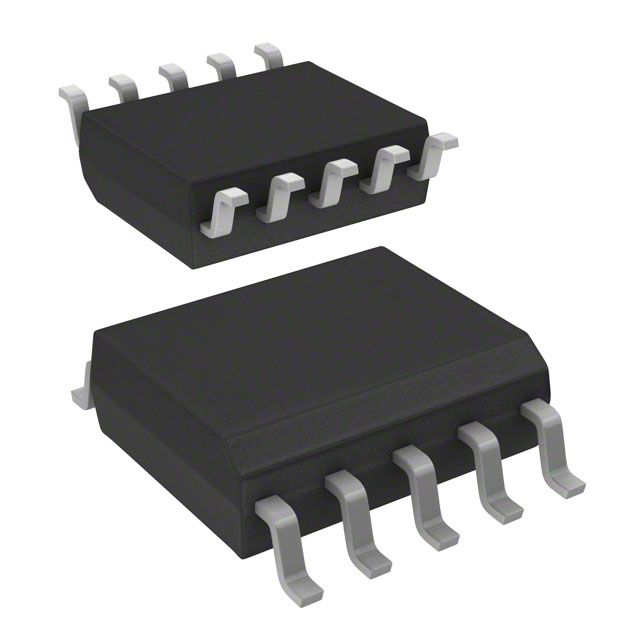
Key Specs
| Spec | Value | Condition | Source |
|---|---|---|---|
| Mode | Continuous Conduction (CCM) | Digi-Key | |
| Switching Frequency (Typ) | 65kHz | Digi-Key | |
| Current Startup | 400 µA | Digi-Key | |
| Voltage Supply | 10V ~ 24.5V | Digi-Key | |
| Operating Temperature Range | -40°C ~ 150°C (TJ) | Digi-Key | |
| Mounting Type | Surface Mount | Digi-Key | |
| Package Case | 10-SOP (0.154”, 3.90mm Width) | Digi-Key | |
| Supplier Device Package | 10-SSOP | Digi-Key |
When To Use
-
Use the L4986A in offline power supplies for applications requiring a switching frequency of 65 kHz (switching_frequency_typ) and operating supply voltage range between 10 V and 24.5 V (voltage_supply), such as standby power supplies or low-power adapters where continuous conduction mode (CCM) is preferred.
-
Ideal for applications demanding peak inductor current control below 0.49/R (peak_inductor_current_max) and requiring brownout protection up to 500 ms (brownout_protection_time_max).
-
Not recommended for high-frequency switching applications above 130 kHz or those requiring operation beyond the maximum junction temperature of 150°C (operating_temperature_range), such as high-power or automotive environments. Instead, use devices rated for higher switching frequencies and extended temperature ranges.
-
Avoid using this device in applications requiring very low quiescent current below 400 µA (current_startup), as this device’s start-up current is 400 µA (current_startup), which may be too high for ultra-low power designs. Consider dedicated low-power controllers for such use cases.
When Not To Use
-
Output current above 2A: The absolute maximum output current rating of 2A restricts high-load applications. Use a high-current synchronous buck with external FETs designed to handle higher continuous and peak currents safely without thermal runaway.
-
Efficiency-critical, low-voltage step-down (<1V differential): The internal linear start-up current of 400 µA and the fixed switching frequency limit efficiency and noise performance in low dropout conditions. Use an LDO regulator to minimize noise and losses when input-to-output differential is small.
-
Switching frequency above 130 kHz: The fixed switching frequency ceiling at 65 kHz (A version) and 130 kHz (B version) limits designs requiring compact inductors or EMI reduction at higher frequencies. Use a high-frequency buck controller for switching frequencies > 500 kHz.
Application Notes
-
The SW pin (switching node) must be routed with minimal parasitic inductance and placed close to the power MOSFET source and output inductor to reduce voltage spikes and EMI. Use a solid ground plane under the SW loop.
-
Noise-sensitive pins include FB (pin 5) and COMP (pin 6); keep these traces short and shielded from SW and CS lines. Place the 3.3 nF compensation capacitor close to COMP to maintain loop stability.
-
The CS pin (current sense) requires a low-inductance Kelvin connection to the sense resistor. Avoid routing CS near high di/dt nodes to prevent false triggering of overcurrent comparators at -0.49 V and -0.75 V thresholds.
-
Implement guard routing or ground shielding around the PG (power good) pin to avoid noise injection affecting the power-good logic with its 50 µs debounce.
-
The internal pull-up current on FB (10 µA typ.) mandates that the external feedback network be designed to handle this bias without shifting the steady-state voltage reference.
Pin numbers are package-specific. Verify against the datasheet pinout diagram before routing.
Gotchas
-
Incorrect Current Sense Resistor Value:
Mistake: Using a current sense resistor that allows peak current above 0.49/R (peak_inductor_current_max).
Failure Mode: The device triggers overcurrent protection prematurely or fails to protect, causing inductor saturation or device damage.
Fix: Calculate and select resistor value to ensure peak current stays below 0.49/R, verifying with actual load conditions. -
Ignoring Brownout Threshold Settings:
Mistake: Not properly setting the brownout threshold resistors, resulting in thresholds outside the 2.5 V to 4.5 V range (brownout_threshold_min to brownout_threshold_max).
Failure Mode: The device can either fail to shut down during undervoltage conditions or cause false shutdowns during normal operation.
Fix: Design resistor dividers carefully to ensure brownout thresholds fall within specified ranges and verify the brownout protection time of up to 500 ms (brownout_protection_time_max). -
Large Switching Loop Area:
Mistake: Routing the switching node traces with large loop areas.
Failure Mode: Increased EMI emissions and potential device instability due to noise coupling.
Fix: Keep the switching node loop area as small as possible