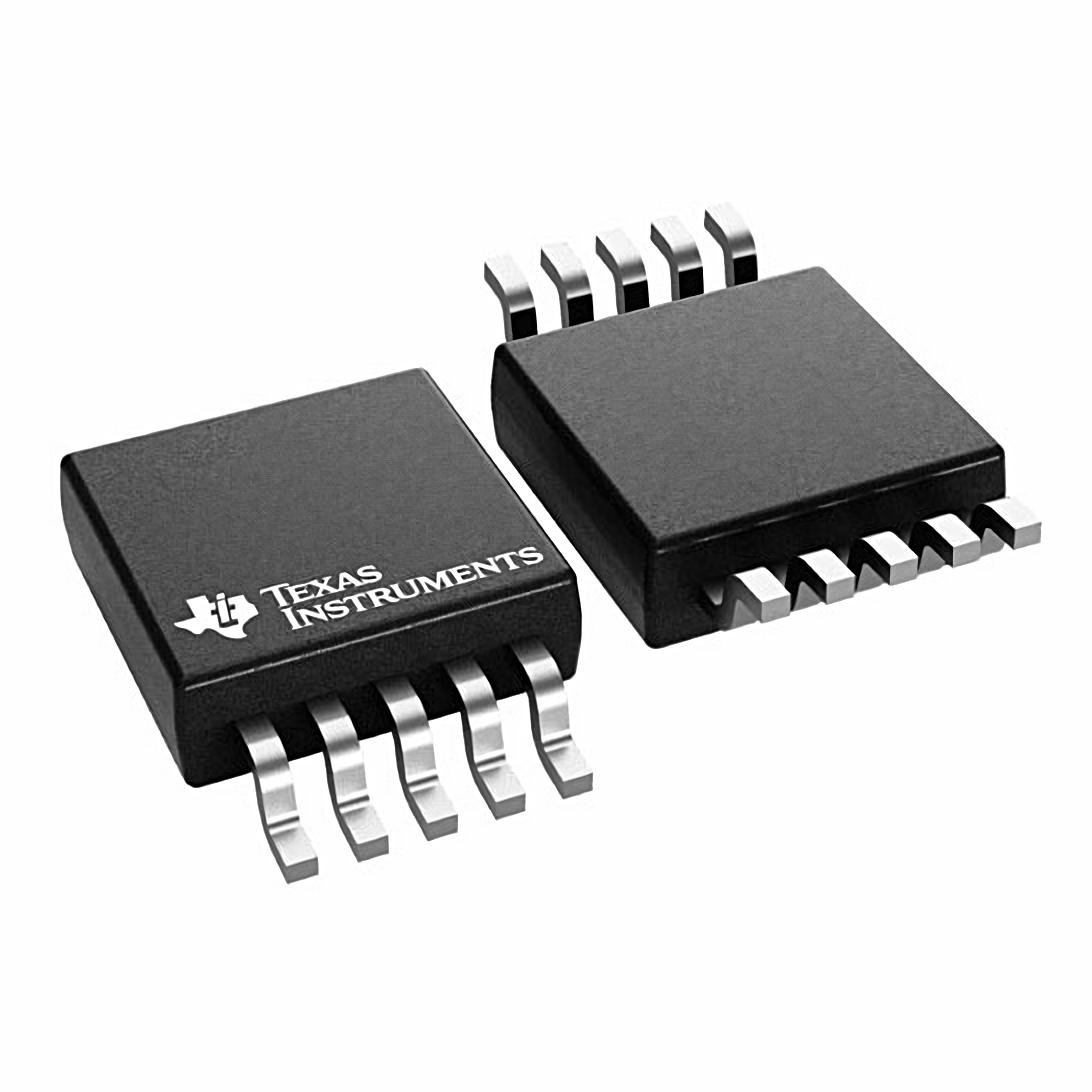
Key Specs
| Spec | Value | Condition | Source |
|---|---|---|---|
| ACcuracy | ±1% | Digi-Key | |
| Function | Current Sense | Digi-Key | |
| Input Voltage (Typ) | 0V ~ 26V | Digi-Key | |
| Mounting Type | Surface Mount | Digi-Key | |
| Operating Temperature Range | -40°C ~ 125°C (TA) | Digi-Key | |
| Output Current (Max) | - | Digi-Key | |
| Package Case | 10-TFSOP, 10-MSOP (0.118”, 3.00mm Width) | Digi-Key | |
| Sensing Method | High/Low-Side | Digi-Key | |
| Supplier Device Package | 10-VSSOP | Digi-Key |
When To Use
-
Automotive 12V battery current sensing, 0–20A load: The 0–26V input range covers the 12V system with margin for cold-crank and load-dump transients. The ±1% accuracy ensures precise current measurement for ECU feedback, whereas a generic current sense amplifier with wider tolerance would cause overcurrent misreads leading to unnecessary derating or false fault trips.
-
High-side current measurement on a 24V industrial motor drive: The high-side sensing method and 26V max input rating allow direct measurement on the motor supply line without additional level shifting. Using a low-side sensing amplifier here would risk ground reference errors and potential shoot-through faults in the motor controller due to inaccurate current feedback.
-
Battery management in a 24V UPS system with surface-mount constraints: The compact 10-TFSOP or 10-MSOP package fits dense layouts, and the -40°C to 125°C operating range covers harsh environments. A through-hole or larger package would complicate thermal management and increase board space, risking thermal runaway under continuous high current conditions.
When Not To Use
-
Current sensing where input voltage exceeds 26V: The maximum input voltage of 26V limits this part’s use for 48V or higher rails. Use a high-voltage current sense amplifier or isolated solution instead.
-
Applications requiring galvanic isolation between sensing and control domains: Since the INA381A2IDGSR lacks isolation, it cannot prevent ground loops or noise injection. Use an isolated flyback controller for galvanic isolation.
-
Ultra-low power battery-powered sensors with μA standby: The device’s quiescent current is not optimized for sub-mA sleep modes and will shorten battery life. Use a low-IQ PFM buck regulator designed for minimal quiescent current in these scenarios.
Application Notes
The INA381A2IDGSR is designed for high- and low-side current sensing with a supply voltage range from 0V to 26V. To minimize noise and ensure accuracy within the ±1% specification, keep the current sense resistor and the device’s input pins physically close to minimize the switching loop area. The input pins are noise-sensitive; therefore, layout should prioritize short, low-inductance connections to the sense resistor. No heatsink is required for typical operation within the -40°C to 125°C ambient temperature range due to the device’s low power dissipation and efficient package thermal characteristics (10-TFSOP, 10-MSOP, or 10-VSSOP).
Gotchas
-
[Underestimating input voltage derating]: The absolute maximum input voltage is 26V, but transient surges above this level cause permanent damage rather than graceful shutdown. Designers assuming the ±26V rating includes transients may see sudden device failure during load dump. Fix: Verify transient voltage profiles with an oscilloscope and add input clamps or TVS diodes rated above 26V.
-
[Incorrect PCB layout causing offset drift]: Unequal trace lengths or routing asymmetry on the sense resistor leads cause input offset voltage to shift with temperature and load current, showing as erratic or drifting current readings under real conditions. Fix: Use matched, symmetrical routing and Kelvin sensing techniques around the resistor.
-
[No minimum load current assumption]: At very low or zero load current, the output can saturate or oscillate due to the amplifier’s input bias current and offset voltage, causing false current readings or noise. Fix: Add a small bleed resistor or minimum load to maintain amplifier linear operation.
-
[Ignoring output loading conditions]: The output of the INA381A2IDGSR is not a low-impedance driver and can be unstable or distorted if connected directly to high-capacitance nodes or loads without a buffer stage. Symptoms include ringing or oscillations on the output waveform. Fix: Use a buffer amplifier or RC snubber on the output line as per layout recommendations.