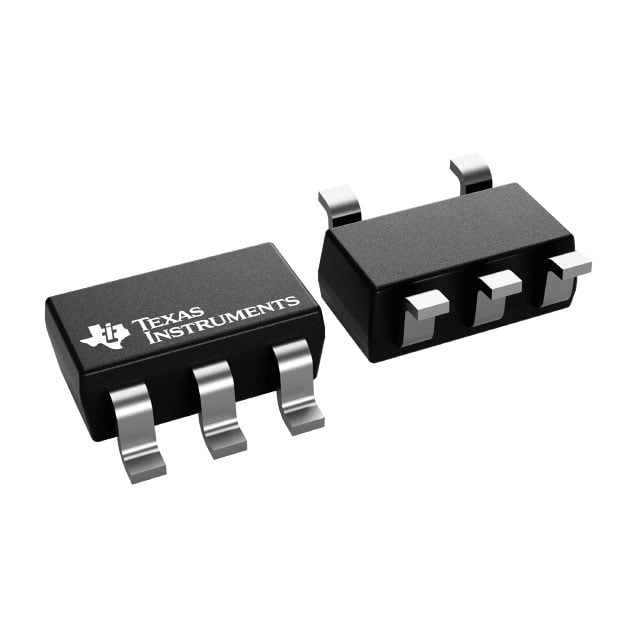
Key Specs
| Spec | Value | Condition | Source |
|---|---|---|---|
| Amplifier Type | Current Sense | Digi-Key | |
| Current Input Bias | 20 µA | Digi-Key | |
| Gain Bandwidth Product | 1 MHz | Digi-Key | |
| Mounting Type | Surface Mount | Digi-Key | |
| Number Of Circuits | 1 | Digi-Key | |
| Operating Temperature Range | -40°C ~ 125°C (TA) | Digi-Key | |
| Output Type | - | Digi-Key | |
| Package Case | SC-74A, SOT-753 | Digi-Key | |
| Quiescent Current (Typ) | 1.5mA | Digi-Key | |
| Slew Rate | 2.5V/µs | Digi-Key | |
| Supplier Device Package | SOT-23-5 | Digi-Key | |
| Voltage Input Offset | 30 µV | Digi-Key | |
| Voltage Supply Span (Max) | 20 V | Digi-Key | |
| Voltage Supply Span (Min) | 2.7 V | Digi-Key |
When To Use
-
Precision high-side current sensing on 12V bus → 0.1–10A with 5mΩ shunt: The 30 µV input offset limits measurement error at 1A (5mV shunt drop) to 0.6% — the the B2 gain variant (same package, 1.3 MHz GBW, 55µV offset)‘s 55µV offset doubles this to 1.1%. For a power meter calibrated once at production without digital auto-zero, that 45µV offset difference is the noise floor. Choose B3 over B2 specifically when offset accuracy is the binding constraint and the 1.3 MHz vs 1 MHz GBW difference is acceptable. A Hall-effect sensor avoids shunt loss but cannot match 30µV-class offset without expensive signal conditioning.
-
Industrial 24V power distribution current monitoring → 0–20A, -40°C to 125°C: The 20V maximum supply covers 24V nominal rails when pre-regulated to 20V through the sense circuit, while the wide temperature range suits industrial DIN-rail environments. The 1.5mA quiescent current is appropriate for continuously active 24V power management circuits — use the an ultra-low-IQ CSA (sub-2µA quiescent class) class if sub-100µA IQ is required on the 24V rail.
-
Active power supply current monitoring where 30µV offset outweighs GBW (dc–10kHz signal content): Within the INA281B series, choose B3 when offset error is tighter than B2’s 55µV limit and the 1MHz GBW is sufficient for the application bandwidth. When the bandwidth requirement exceeds 1MHz or offset is acceptable at 55µV, select the B2 gain variant (same package, 1.3 MHz GBW, 55µV offset) — identical package and supply range, lower cost, higher GBW.
When Not To Use
-
Measuring fast transient currents with high di/dt in switching power supplies: The 1 MHz gain-bandwidth product limits response speed and may cause output distortion or ringing. Use a higher-bandwidth current-sense amplifier to capture transient waveforms without aliasing or signal integrity loss.
-
Detecting sub-µA leakage currents in precision instrumentation: The 30 µV input offset voltage and 20 µA input bias current exceed the noise floor for ultra-low current sensing. A lower-offset current-sense amplifier is required to avoid offset-induced measurement errors and ensure accurate leakage detection.
-
High-side current sensing in isolated AC mains applications: This device lacks galvanic isolation, which is critical to prevent ground loops and ensure user safety. Employ an isolated current-sense amplifier to maintain isolation barrier and avoid catastrophic damage or personal injury.
Application Notes
-
The 20 µA input bias current is 40× higher than sub-nA-bias precision CSAs (500 pA class). At shunt values above 5mΩ, this adds a fixed 100µV of differential input offset regardless of load current. Size the shunt to keep this term below 10% of the minimum signal of interest, or calibrate the offset in firmware.
-
At 1 MHz GBW on a 20V supply, the input stage is sensitive to supply-borne switching noise. Place a 100nF X5R ceramic directly at the supply pin and add a 1µF bulk capacitor within 10mm to suppress low-frequency ripple from the high-voltage rail.
-
The 2.5 V/µs slew rate means a 10A/µs current transient through a 5mΩ shunt (50mV/µs rate-of-change) will be tracked without output clipping, but a 100A/µs transient (500mV/µs) will saturate the output briefly. If capturing fast fault events, verify slew margin using a current probe alongside the output waveform.
-
At 20V supply, common-mode input voltage may approach 18V on high-side sensing configurations. Verify that the input pin voltage never exceeds the 20V supply span, including during inductive kickback transients in motor applications.
-
The output type is not rail-to-rail; verify the output swing specification against your ADC’s input range. Do not assume ground-referred output extends to 0V — check the minimum output voltage in the datasheet against the minimum current to measure.
Related Calculators
- Current Sense / Shunt Resistor Calculator — Size your shunt resistor for this amplifier
Gotchas
-
[Ignoring input bias current effect on shunt resistor]: Engineers may assume the 20 µA input bias current is negligible at all shunt resistor values. In reality, large shunt resistors cause offset voltage drops that shift measured current, leading to inaccurate readings or false alarms. Fix by choosing shunt resistor values that balance sensitivity and input bias error, and verify offset voltage with actual load current applied.
-
[No thermal relief on PCB for SOT-23-5]: The small package and limited thermal conduction can cause local hotspots if copper pours are not properly connected or thermal vias omitted. This leads to drift in offset voltage and eventual device stress. Fix by designing dedicated thermal pads and using at least two thermal vias under or near the package.
-
[Routing input traces near noisy switching nodes]: Placing the current-sense input lines close to fast switching nodes (SW) induces high-frequency noise, corrupting the low-level sense signal and causing output jitter or false triggering in downstream logic. Fix by routing input traces away from SW nodes and adding guard traces tied to ground around sensitive inputs.
-
[Failure to account for minimum supply voltage during startup]: The device requires at least 2.7 V supply voltage; powering from slowly rising rails or battery stacks without sequencing may cause the output to remain undefined or saturate during startup, confusing system diagnostics. Fix by verifying supply ramp timing and adding power-good signals or reset logic to downstream circuitry.