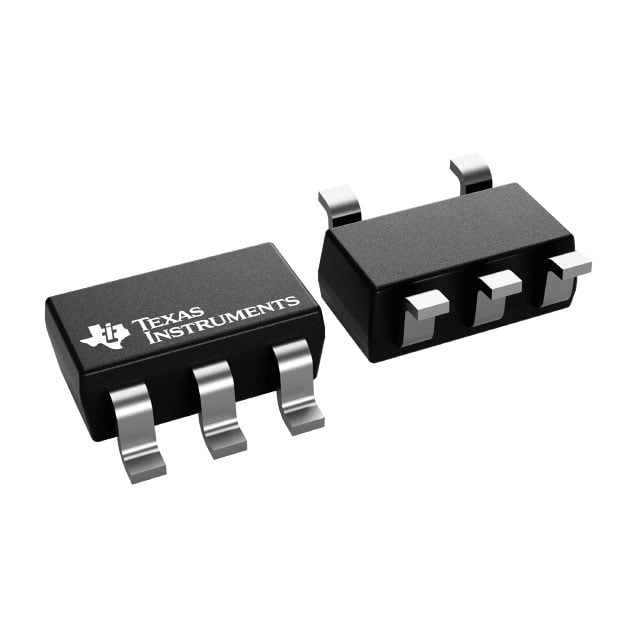
Key Specs
| Spec | Value | Condition | Source |
|---|---|---|---|
| Amplifier Type | Current Sense | Digi-Key | |
| Current Input Bias | 20 µA | Digi-Key | |
| Gain Bandwidth Product | 1.3 MHz | Digi-Key | |
| Mounting Type | Surface Mount | Digi-Key | |
| Number Of Circuits | 1 | Digi-Key | |
| Operating Temperature Range | -40°C ~ 125°C (TA) | Digi-Key | |
| Output Type | - | Digi-Key | |
| Package Case | SC-74A, SOT-753 | Digi-Key | |
| Quiescent Current (Typ) | 1.5mA | Digi-Key | |
| Slew Rate | 2.5V/µs | Digi-Key | |
| Supplier Device Package | SOT-23-5 | Digi-Key | |
| Voltage Input Offset | 55 µV | Digi-Key | |
| Voltage Supply Span (Max) | 20 V | Digi-Key | |
| Voltage Supply Span (Min) | 2.7 V | Digi-Key |
When To Use
-
12V automotive rail current sensing @ 10A: The wide supply range from 2.7 V to 20 V and robust -40°C to 125°C rating make INA281B2IDBVR ideal for harsh automotive environments. Alternatives lacking this temperature range risk latch-up or parameter drift, causing inaccurate current readings under hot engine conditions.
-
Battery-powered motor controller with 1.5mA quiescent current budget: The low quiescent current of 1.5mA enables continuous current monitoring without excessive battery drain. Using a current sense amplifier with higher IQ would cause premature battery depletion, resulting in system brownout.
-
Precision current sensing in low-voltage DC/DC converters (3.3V rails): The low input offset voltage of 55 µV ensures accurate current measurement even at low voltages, avoiding offset-induced errors. Alternatives with higher offset voltage lead to false trip thresholds and incorrect current limiting, risking thermal runaway.
When Not To Use
-
High-current power stage > 10A: Current input bias of 20 µA and package size limit practical current sensing capability and thermal dissipation. Use a high-current synchronous buck with external FETs designed for higher load currents and thermal management.
-
Energy-harvesting sensor node with μA sleep current requirements: Quiescent current of 1.5mA is too high for ultra-low-power systems where battery life is critical. Use a low-IQ PFM buck to minimize standby current.
-
Switching frequency > 500kHz for compact magnetics: Gain-bandwidth product of 1.3 MHz limits accurate current measurement bandwidth in fast switching. Use a high-frequency buck controller to maintain signal integrity and avoid control loop instability.
Application Notes
-
Keep the current sense resistor and INA281B2IDBVR inputs physically close with short, symmetrical traces to minimize parasitic inductance and noise pickup on the 20 µA bias current path.
-
the IN+ pin and the IN− pin are noise-sensitive inputs; route these away from high di/dt switching nodes and avoid running parallel to the SW node to prevent offset errors.
-
The output pin (pin 4) should be buffered or filtered if driving long cables or high-capacitance loads to preserve the 2.5 V/µs slew rate and avoid ringing.
-
Guard routing around the input pins is recommended to shield from PCB surface leakage currents and maintain the 55 µV offset accuracy over temperature and humidity.
-
Power supply decoupling to the 2.7–20 V supply pin (pin 5) must be close and low-inductance to prevent supply noise coupling into the output.
Pin numbers are package-specific. Verify against the datasheet pinout diagram before routing.
Gotchas
-
[Input bias current interaction with high-value sense resistor]: Designers often increase sense resistor value to improve output voltage swing, assuming the 20 µA input bias current is negligible. What happens: The input bias current flowing through the sense resistor creates an offset voltage that skews current measurement, causing systematic under- or overestimation. Fix: Calculate the voltage drop caused by bias current (20 µA × R_sense) and select R_sense low enough to keep offset within accuracy targets.
-
[Output loading causing slew rate degradation]: Assuming the output can directly drive large capacitive loads or long cables without buffering leads to slowed edge transitions. What happens: Output slew rate slows below 2.5 V/µs, causing delay and distortion in sensed current waveform, potentially triggering false alarms or missed events. Fix: Add a buffer amplifier or RC low-pass filter tailored to preserve signal integrity.
-
[Neglecting offset voltage drift at temperature extremes]: Relying solely on the 55 µV offset spec at room temperature ignores offset drift over the -40°C to 125°C range. What happens: Offset voltage increases, leading to inaccurate current sensing and false trip points at temperature extremes. Fix: Verify offset voltage across operating temperature in system calibration or include temperature compensation in firmware.
-
[Power supply sequencing ignored]: Applying supply voltage above 2.7 V before stable input common-mode voltage is present can cause the device output to latch or glitch. What happens: Output saturates or oscillates during power-up, confusing downstream controllers or ADCs. Fix: Ensure input common-mode voltage is valid before enabling supply, or use controlled power sequencing in board design.