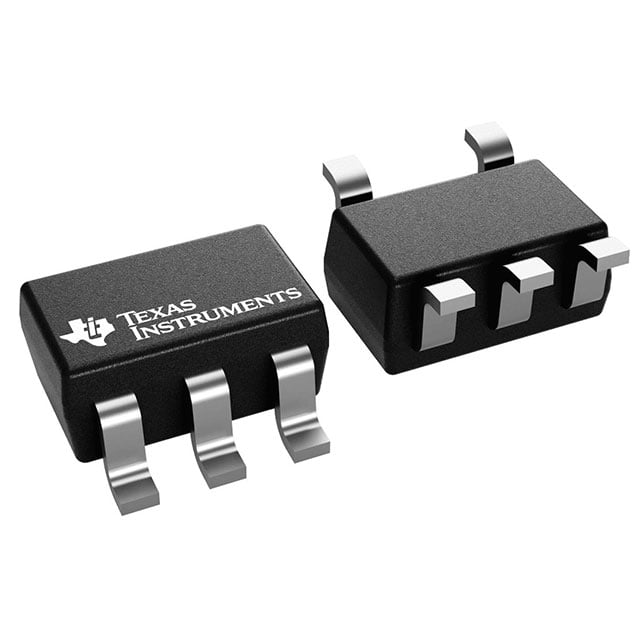
Key Specs
| Spec | Value | Condition | Source |
|---|---|---|---|
| Amplifier Type | Current Sense | Digi-Key | |
| Current Input Bias | 20 µA | Digi-Key | |
| Gain Bandwidth Product | 1.1 MHz | Digi-Key | |
| Mounting Type | Surface Mount | Digi-Key | |
| Number Of Circuits | 1 | Digi-Key | |
| Operating Temperature Range | -40°C ~ 125°C (TA) | Digi-Key | |
| Output Type | - | Digi-Key | |
| Package Case | 5-TSSOP, SC-70-5, SOT-353 | Digi-Key | |
| Quiescent Current (Typ) | 370µA | Digi-Key | |
| Slew Rate | 2V/µs | Digi-Key | |
| Supplier Device Package | SC-70-5 | Digi-Key | |
| Voltage Input Offset | 15 µV | Digi-Key | |
| Voltage Supply Span (Max) | 20 V | Digi-Key | |
| Voltage Supply Span (Min) | 2.7 V | Digi-Key |
When To Use
Use the INA280A2QDCKRQ1 in applications requiring precise current sensing with low input offset voltage (15 µV typical) and moderate bandwidth (1.1 MHz gain bandwidth product), such as battery management systems, power supply monitoring, or motor control where the operating temperature range of -40°C to 125°C and surface mount package (SC-70-5) are suitable.
Do not use this device in high-frequency switching applications requiring bandwidths significantly above 1.1 MHz or where input bias currents exceeding 20 µA would affect measurement accuracy; for those cases, consider a current sense amplifier with higher bandwidth and lower input bias current.
When Not To Use
-
High-current (>5 A) power stage current sensing: The INA280A2QDCKRQ1’s maximum input bias current of 20 µA and quiescent current of 370 µA limit its use at very high currents where power dissipation and accuracy degrade. Use a high-current synchronous buck with external FETs controller to handle larger currents efficiently and safely.
-
Battery-powered sensor node requiring ultra-low standby current: The 370 µA quiescent current is too high for μA-level sleep mode applications, which would drain small batteries quickly. Use a low-IQ PFM buck instead for extended battery life.
-
Switching applications requiring >500 kHz frequency: The 1.1 MHz gain-bandwidth and 2 V/µs slew rate limit the speed at which this amplifier can accurately sense current ripple at frequencies above roughly 500 kHz. For higher switching frequencies, a high-frequency buck controller is necessary to maintain stable operation and accurate sensing.
Application Notes
The INA280A2QDCKRQ1’s input pins (current sensing inputs) are connected across the shunt resistor and are the most noise-sensitive nodes; routing these traces with minimal loop area and shielding from switching nodes is critical to maintain measurement accuracy.
The device’s supply pin (V+) should be decoupled with a 0.1 µF ceramic capacitor placed as close as possible to minimize supply noise coupling.
In typical operation within the -40°C to 125°C temperature range and with a quiescent current of 370 µA, no additional heatsinking is required under normal power dissipation conditions, given the low power consumption and surface mount package (SC-70-5).
To minimize electromagnetic interference, keep the loop area formed by the shunt resistor and device inputs as small as possible, and avoid routing high-current switching signals near the amplifier inputs.
Gotchas
-
Incorrect shunt resistor selection: Using a shunt resistor with too high a value causes the input voltage to exceed the maximum supply voltage span (20 V), saturating the amplifier output and resulting in inaccurate current measurement. To avoid this, choose a resistor value that keeps the maximum expected voltage drop within the 2.7 V to 20 V input range.
-
Insufficient supply bypassing: Omitting or undersizing the supply bypass capacitor near the device leads to increased output noise and potential instability, especially under dynamic load conditions. Always place a 0.1 µF ceramic capacitor as close as possible to the supply pin to maintain stable operation.
-
Ignoring input bias current effects: The device has an input bias current of 20 µA; if the input source impedance is too high, this bias current can introduce significant offset errors. To prevent this, ensure the source impedance is kept low or compensate for this offset in the system design.