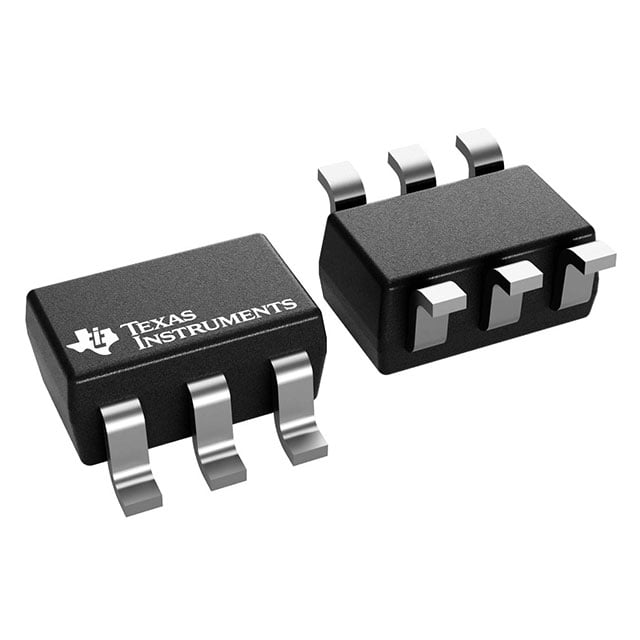
Key Specs
| Spec | Value | Condition | Source |
|---|---|---|---|
| Amplifier Type | Current Sense | Digi-Key | |
| Current Input Bias | 500 pA | Digi-Key | |
| Gain Bandwidth Product | 33 kHz | Digi-Key | |
| Mounting Type | Surface Mount | Digi-Key | |
| Number Of Circuits | 1 | Digi-Key | |
| Operating Temperature Range | -40°C ~ 125°C (TA) | Digi-Key | |
| Output Type | Rail-to-Rail | Digi-Key | |
| Package Case | 6-TSSOP, SC-88, SOT-363 | Digi-Key | |
| Quiescent Current (Typ) | 48µA | Digi-Key | |
| Slew Rate | 0.3V/µs | Digi-Key | |
| Supplier Device Package | SC-70-6 | Digi-Key | |
| Voltage Input Offset | 3 µV | Digi-Key | |
| Voltage Supply Span (Max) | 5.5 V | Digi-Key | |
| Voltage Supply Span (Min) | 1.7 V | Digi-Key |
When To Use
-
Current sensing in low-voltage battery-powered systems (1.7 V to 5.5 V supply): The INA190A4IDCKR’s wide supply range down to 1.7 V makes it ideal for monitoring current in single-cell Li-ion or multi-cell alkaline packs without requiring additional level shifting. Using a current sense amplifier with a higher minimum supply voltage would cause the output to saturate or become non-functional at these low rails.
-
Precision current measurement with very low offset at moderate bandwidth: The 3 µV input offset voltage combined with a 33 kHz gain-bandwidth product allows accurate, low-drift current sensing in motor control feedback loops or battery fuel gauges without introducing steady-state error. Alternative amplifiers with higher offset or lower bandwidth risk inaccurate current reporting or slow transient response, leading to instability or false alarms.
-
Space-constrained applications requiring SC-70-6 package and ultra-low quiescent current: The SC-70-6 package, coupled with a 48 µA quiescent current, suits compact, energy-efficient designs such as medical wearables or portable instrumentation. Using a larger package or a higher quiescent current amplifier would increase board area and reduce battery life, potentially causing thermal issues in sealed enclosures.
When Not To Use
-
High-current (> 5A) power stage current sensing: The INA190A4IDCKR’s input bias current of 500 pA and typical gain bandwidth of 33 kHz limit its ability to accurately sense very high currents where fast transient response and low offset drift under large currents are required. Use a high-current synchronous buck with external FETs controller optimized for robust current sensing and gate drive.
-
Switching frequency > 500 kHz in power converters: The 33 kHz gain bandwidth product and 0.3 V/µs slew rate are insufficient for stable current sensing in converters switching above 500 kHz, causing bandwidth-induced phase lag and oscillations. Use a high-frequency buck controller designed for stable operation at elevated switching frequencies.
-
Isolated current sensing in systems requiring galvanic isolation: The INA190A4IDCKR lacks isolation capability and cannot prevent ground loops or high-voltage transients between domains. Use an isolated flyback controller or isolated current sensing solution to ensure safety and signal integrity.
Application Notes
-
Keep the current sense resistor and the INA190A4IDCKR inputs as close as possible to minimize parasitic inductance and noise pickup, which can degrade accuracy given the low-level input signals.
-
The output stage is rail-to-rail but limited to a maximum supply voltage of 5.5 V; ensure the supply voltage does not exceed this limit to prevent device damage.
-
Pins 1 and 2 are the current sense inputs; route these traces away from noisy switching nodes to avoid injecting switching noise into the amplifier input.
-
Use guard routing or ground pour around the input traces to reduce leakage currents and maintain the low input bias current performance.
-
Avoid routing switching node (SW) traces or high di/dt current loops near the INA190A4IDCKR to prevent capacitive coupling that may cause output jitter or offset shifts.
Gotchas
-
[Low supply voltage startup]: Designers may assume the INA190A4IDCKR output will be valid immediately at the minimum 1.7 V supply. In reality, output offset and linearity degrade near the lower supply limit, causing inaccurate current readings during startup or brownout conditions. Verify output accuracy with bench measurements at the lowest supply voltage expected.
-
[Input bias current interaction with high-value sense resistors]: Using large sense resistors to increase signal amplitude may cause an unexpected voltage drop due to the 500 pA input bias current, leading to measurement offset drift over temperature. Confirm sense resistor values keep input currents within the bias current budget or compensate in firmware.
-
[Output loading and stability]: The rail-to-rail output stage can become unstable or distorted if heavily loaded or if connected directly to low-impedance ADC inputs without buffering, manifesting as output ringing or slow settling. Use a buffer amplifier or ensure the ADC input impedance exceeds 100 kΩ.
-
[Layout-induced noise coupling]: Placing the INA190A4IDCKR input or output traces adjacent to high di/dt switching nodes causes capacitive coupling, resulting in noisy or oscillating outputs that simulate current spikes. Maintain physical separation and route sensitive input lines orthogonally to noisy traces.
Related Calculators
- Current Sense / Shunt Resistor Calculator — Size your shunt resistor for this amplifier’s gain and V_ref