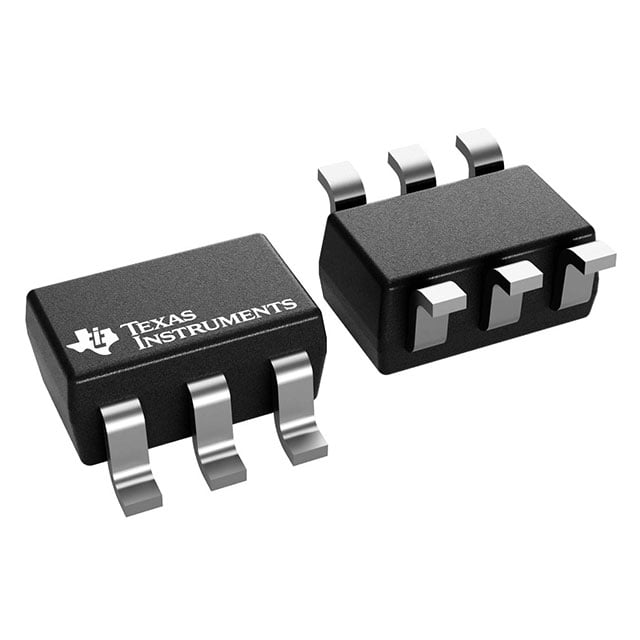
Key Specs
| Spec | Value | Condition | Source |
|---|---|---|---|
| Amplifier Type | Current Sense | Digi-Key | |
| Current Input Bias | 500 pA | Digi-Key | |
| Gain Bandwidth Product | 35 kHz | Digi-Key | |
| Grade | Automotive | Digi-Key | |
| Mounting Type | Surface Mount | Digi-Key | |
| Number Of Circuits | 1 | Digi-Key | |
| Operating Temperature Range | -40°C ~ 125°C (TA) | Digi-Key | |
| Output Type | Rail-to-Rail | Digi-Key | |
| Package Case | 6-TSSOP, SC-88, SOT-363 | Digi-Key | |
| Qualification | AEC-Q100 | Digi-Key | |
| Quiescent Current (Typ) | 48µA | Digi-Key | |
| Slew Rate | 0.3V/µs | Digi-Key | |
| Supplier Device Package | SC-70-6 | Digi-Key | |
| Voltage Input Offset | 3 µV | Digi-Key | |
| Voltage Supply Span (Max) | 5.5 V | Digi-Key | |
| Voltage Supply Span (Min) | 1.7 V | Digi-Key |
When To Use
-
Current sensing in automotive battery monitoring (12V @ 100A): The INA190A3QDCKRQ1’s AEC-Q100 qualification and operating temperature range down to −40°C and up to 125°C ensure reliable operation in harsh automotive environments. Using a generic current sense amplifier without automotive qualification risks early device failure due to latch-up or parameter drift outside this temperature range.
-
Low-voltage current measurement in portable instrumentation (1.8V supply @ 10mA): The device’s wide supply range from 1.7 V to 5.5 V and ultra-low input bias current (500 pA) enable accurate current measurement near system rails with minimal offset error. A standard amplifier with higher input bias current would introduce significant offset, causing inaccurate readings and possible thermal runaway in sensitive low-current loads.
-
Precision current feedback in low quiescent current applications (48 µA IQ typical): The INA190A3QDCKRQ1’s low quiescent current allows continuous current monitoring without excessive power loss, critical in systems powered by limited capacity sources. Using a high-IQ amplifier would drain the battery prematurely, causing unexpected system shutdown.
When Not To Use
-
High-frequency switching power supply with >500 kHz switching frequency: The 35 kHz gain bandwidth product and 0.3 V/µs slew rate limit the device’s response speed, making it unsuitable for fast transient current sensing. Use a high-frequency buck controller instead, designed to operate reliably at these switching rates.
-
Applications requiring galvanic isolation between primary and secondary current loops: The device lacks isolation capability and cannot break ground loops or handle common-mode voltage spikes. Use an isolated flyback solution to ensure safe and accurate measurement under these conditions.
-
Continuous measurement of output currents exceeding several amperes with high efficiency requirements: The device’s single-channel design and output stage are not intended for very high current or multi-phase systems. Use a multi-phase buck controller for current sharing and efficiency at high output currents.
Application Notes
-
The INA190A3QDCKRQ1’s input pins are highly noise-sensitive; route input traces (pins 2 and 3) as short and shielded as possible from switching nodes to minimize interference. Avoid running these traces parallel to noisy switching nodes or high dI/dt loops.
-
The device’s output is rail-to-rail (pin 6), but the slow slew rate (0.3 V/µs) can limit response to fast transient currents; include a properly sized output filter capacitor to stabilize the output without adding excessive delay.
-
Ground reference (pin 1) must have a low-impedance connection to the system ground plane to prevent offset errors; use a dedicated ground pour with guard traces around the input pins to reduce leakage currents.
-
Avoid routing the output trace near any switching nodes or high-current traces to prevent capacitive coupling and false readings.
-
The package (SC-70-6) requires careful thermal pad design despite low quiescent current; ensure adequate PCB copper area beneath the device for stable operation across the −40°C to 125°C range.
Pin numbers are package-specific. Verify against the datasheet pinout diagram before routing.
Gotchas
-
[Input bias current drift at high temperature]: The 500 pA input bias current specified at typical conditions can increase substantially near 125°C, causing offset voltage drift and measurement errors. Symptoms include slowly drifting current readings with temperature ramp. Fix: Characterize input bias current over temperature in the end system and include offset calibration or compensation in firmware.
-
[Output saturation due to insufficient supply voltage margin]: Operating the device near the minimum supply voltage (1.7 V) while measuring currents that drive output close to rails can cause output stage saturation and clipping. This manifests as distorted or truncated output signals on scope. Fix: Ensure supply voltage has at least 10% margin above 1.7 V or design for output swing within rail-to-rail limits at expected loads.
-
[Leakage current paths from PCB contamination]: The extremely low input bias current makes the device sensitive to PCB surface leakage caused by flux residues or moisture, resulting in offset errors and noisy output. Symptoms include erratic output voltage unrelated to load current. Fix: Use rigorous cleaning procedures and apply conformal coating or guard rings around input pins.
-
[Startup glitches from improper power sequencing]: If the device’s supply pin powers up much later than the input common-mode voltage source, the output can latch into an undefined state, causing false current readings on power-up. Fix: Design power sequencing so the INA190A3QDCKRQ1 supply rail is stable before or simultaneously with the sensed current path voltage.
Related Calculators
- Current Sense / Shunt Resistor Calculator — Size your shunt resistor for this amplifier’s gain and V_ref