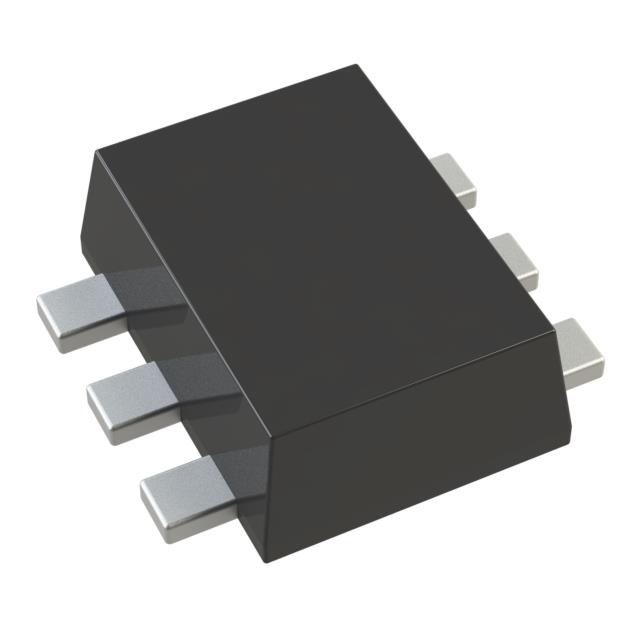
Key Specs
| Spec | Value | Condition | Source |
|---|---|---|---|
| 3db Bandwidth | 350 kHz | Digi-Key | |
| Amplifier Type | Current Sense | Digi-Key | |
| Current Input Bias | 75 µA | Digi-Key | |
| Grade | - | Digi-Key | |
| Mounting Type | Surface Mount | Digi-Key | |
| Number Of Circuits | 1 | Digi-Key | |
| Operating Temperature Range | -40°C ~ 125°C (TA) | Digi-Key | |
| Output Type | Rail-to-Rail | Digi-Key | |
| Package Case | SOT-563, SOT-666 | Digi-Key | |
| Qualification | - | Digi-Key | |
| Quiescent Current (Typ) | 200µA | Digi-Key | |
| Slew Rate | 2V/µs | Digi-Key | |
| Supplier Device Package | SOT-563 | Digi-Key | |
| Voltage Input Offset | 100 µV | Digi-Key | |
| Voltage Supply Span (Max) | 5.5 V | Digi-Key | |
| Voltage Supply Span (Min) | 2.7 V | Digi-Key |
When To Use
Use the INA185A1IDRLR in applications requiring precise current sensing with a moderate bandwidth of up to 350 kHz, such as battery management systems, power supply monitoring, or motor control where the quiescent current of 200 µA and rail-to-rail output are advantageous. Its low input offset voltage of 100 µV enables accurate low-level current measurements.
Do not use this device in high-frequency switching power supplies requiring bandwidths beyond 350 kHz or in applications demanding ultra-low input bias currents below 75 µA, such as precision instrumentation amplifiers. For these cases, consider alternative current sense amplifiers with higher bandwidth or lower input bias current specifications.
When Not To Use
-
High switching frequency DC/DC converter (>500 kHz): The 350 kHz bandwidth and 2 V/µs slew rate limit the fidelity of current waveform tracking above 500 kHz. Use a high-frequency buck controller instead, which is designed for stable operation and accurate current sensing at elevated switching frequencies.
-
Always-on battery-powered sensor with μA-level sleep current: The 200 µA quiescent current is too high for ultra-low-power standby modes and will drain small batteries prematurely. Choose a low-IQ PFM buck to minimize quiescent current and extend battery life in such applications.
-
High-current load monitoring exceeding device thermal or current capability: The single-circuit, low package power dissipation limits maximum measurable current before self-heating or damage occurs. Use a high-current synchronous buck with external FETs to handle higher currents with efficient thermal distribution and robust current sensing.
Application Notes
The INA185A1IDRLR’s input nodes connect directly across the shunt resistor, which carries the switching current and thus must have the smallest possible loop area to minimize inductive noise pickup. The input pins are noise-sensitive; careful PCB layout with short, symmetrical traces and proper grounding is essential.
The device’s output pin provides a rail-to-rail voltage output but can be susceptible to noise if the supply is unstable, so a 0.1 µF decoupling capacitor at the supply pin is recommended. Given the typical quiescent current of 200 µA and moderate slew rate of 2 V/µs, no heatsink is necessary under typical operating conditions within the -40°C to 125°C ambient temperature range.
Gotchas
-
Incorrect shunt resistor selection:
Mistake: Using a shunt resistor value that causes the input voltage to exceed the maximum supply voltage span of 5.5 V.
Failure mode: This can damage the INA185A1IDRLR or cause output saturation, leading to incorrect current readings.
Fix: Calculate the shunt resistor value to ensure the maximum expected current produces a voltage within the 2.7 V to 5.5 V supply range and verify with worst-case current conditions. -
Neglecting power supply decoupling:
Mistake: Omitting or undersizing the decoupling capacitor at the supply pin.
Failure mode: Results in increased output noise and potential instability due to supply voltage fluctuations.
Fix: Place a 0.1 µF ceramic capacitor as close as possible to the supply pin to minimize noise and maintain stable operation. -
Improper PCB layout causing noise coupling:
Mistake: Allowing large loop areas on the input side or routing noisy signals near the input pins.
Failure mode: Increased input-referred noise and offset errors, degrading measurement accuracy.
Fix: Minimize the loop area of the current sensing path and keep sensitive input nodes away from switching or noisy traces.
Related Calculators
- Current Sense / Shunt Resistor Calculator — Size your shunt resistor for this amplifier’s gain and V_ref