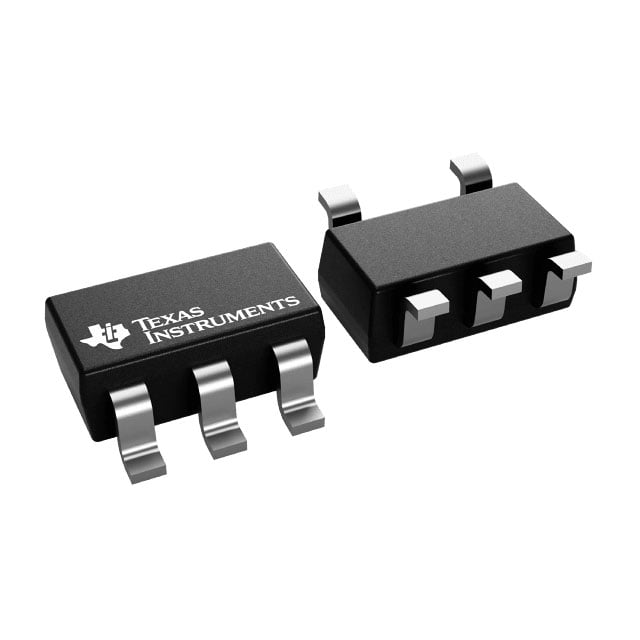
Key Specs
| Spec | Value | Condition | Source |
|---|---|---|---|
| 3db Bandwidth | 350 kHz | Digi-Key | |
| Amplifier Type | Current Sense | Digi-Key | |
| Current Input Bias | 80 µA | Digi-Key | |
| Mounting Type | Surface Mount | Digi-Key | |
| Number Of Circuits | 1 | Digi-Key | |
| Operating Temperature Range | -40°C ~ 125°C | Digi-Key | |
| Output Type | Rail-to-Rail | Digi-Key | |
| Package Case | SC-74A, SOT-753 | Digi-Key | |
| Quiescent Current (Typ) | 260µA | Digi-Key | |
| Slew Rate | 2V/µs | Digi-Key | |
| Supplier Device Package | SOT-23-5 | Digi-Key | |
| Voltage Input Offset | 100 µV | Digi-Key | |
| Voltage Supply Span (Max) | 5.5 V | Digi-Key | |
| Voltage Supply Span (Min) | 2.7 V | Digi-Key |
When To Use
-
Current sensing in 12V automotive systems: The INA180A2IDBVR’s 100 µV input offset voltage and 350 kHz bandwidth enable precise measurement of fast transient currents on a 12V bus. Using a general-purpose op amp here risks thermal drift and offset errors that mask transient events critical for diagnostics.
-
Battery-powered industrial sensors operating at 3.3V: The low quiescent current of 260 µA combined with a rail-to-rail output stage suits accurate current measurement without excessive power drain. A generic current sense amplifier with higher quiescent current would shorten battery life or cause thermal runaway in compact enclosures.
-
Surface mount current monitoring on motor driver boards: The SC-74A (SOT-23-5) package and 80 µA input bias current allow easy integration near high-current shunt resistors with minimal PCB area and noise pickup. Discrete transistor circuits or large packages increase parasitic inductance and risk latch-up under motor PWM switching noise.
When Not To Use
-
Output current sensing above 1A continuous: The INA180A2IDBVR’s input bias and package are not rated for high power dissipation from large shunt voltage drops. Use a high-current synchronous buck with external FETs that can handle both high current and thermal load.
-
Battery-powered IoT nodes requiring sub-10µA sleep current: The quiescent current of 260 µA is too high for ultra-low-power standby modes. A low-IQ PFM buck with sub-µA sleep current is required to avoid premature battery depletion.
-
Switching power supplies operating above 500 kHz: The 350 kHz bandwidth and 2 V/µs slew rate limit accurate current sensing at high switching frequencies. Select a high-frequency buck controller designed for clean operation above 500 kHz switching nodes.
Application Notes
-
the input pin and the output pin must have tight, short routing to minimize offset errors from PCB trace resistance and inductance; guard routing around the input pins reduces noise injection from switching nodes.
-
The output’s rail-to-rail capability requires clean, stable supply between 2.7 V and 5.5 V; avoid supply dips below 2.7 V during transient load steps to prevent output saturation.
-
The device’s 80 µA input bias current can create measurable voltage drops across high-value shunt resistors; keep shunt resistance low enough to maintain accuracy without excessive power loss.
-
Thermal coupling to the PCB must consider the SC-74A package’s limited dissipation; avoid placing heat-generating components adjacent without thermal relief or copper pours connected to the device’s ground pin.
Gotchas
-
[Input bias current interaction with high-value shunt]: Designers often assume input bias current is negligible like in precision op amps. In reality, the 80 µA bias can cause offset voltages across large shunt resistors, distorting sensed current and causing apparent drift on scope traces. Fix by selecting shunts below a few milliohms or calibrating bias-induced offset.
-
[Supply voltage dips causing output saturation]: During fast transient loads, the supply can momentarily drop below 2.7 V, pushing the output out of its rail-to-rail range. This results in clipped or flatlined output waveforms that mimic sensor failure. Fix by adding local bulk capacitance or a dedicated LDO regulator to maintain minimum supply voltage.
-
[Noise coupling from adjacent switching nodes]: The SOT-23-5 package pins are close together, and switching node noise can couple into the input if layout does not include guard traces or ground fills. This causes jitter and erroneous current readings, visible as high-frequency noise on the output. Fix by implementing guard routing and physically separating sensitive input traces from high di/dt nodes.
-
[Startup sequencing with no load]: When powering the INA180A2IDBVR with no load on the output line, the device output may float or produce unstable readings until a minimum load current is present. This can be misinterpreted as device failure during bench testing. Fix by ensuring a minimal load or test resistor is connected during bring-up.
Related Calculators
- Current Sense / Shunt Resistor Calculator — Size your shunt resistor for this amplifier’s gain and V_ref