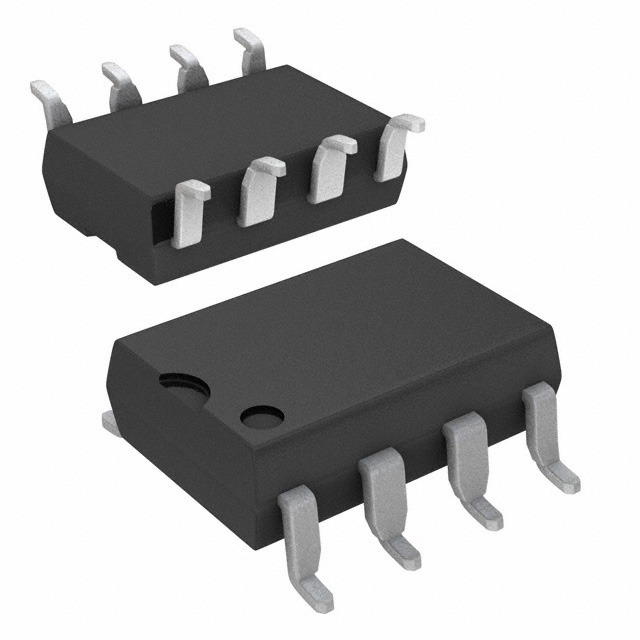
HCPL-J312-500E vs FAD7191M1X: Gate Driver IC Comparison
Quick verdict
For isolated gate driving in high-voltage industrial or motor control applications requiring galvanic isolation and robust noise immunity, the HCPL-J312-500E is the better choice due to its 3750 Vrms isolation and 25 kV/µs common mode transient immunity. For integrated dual-channel gate driving of high- and low-side MOSFETs or IGBTs in automotive or power conversion systems, especially where AEC-Q100 qualification, higher peak drive current (4.5 A), and faster switching (25 ns rise/fall) are crucial, the FAD7191M1X is the superior option.
Spec comparison table
| Spec | HCPL-J312-500E | FAD7191M1X | Notes |
|---|---|---|---|
| Approval Agency | CSA, IEC/EN/DIN, UR | AEC-Q100 | FAD7191M1X has automotive qualification (AEC-Q100), important for automotive; HCPL-J312-500E is industrial. |
| Common Mode Transient Immunity (min) | 25 kV/µs | Not specified | HCPL-J312-500E offers explicit high noise immunity, critical for isolations in noisy environments. |
| DC Forward Current Max (If) | 25 mA | Not specified | HCPL-J312-500E LED input current spec is relevant for input drive considerations; No data for FAD7191M1X. |
| Output Current (High/Low) | 2 A source, 2 A sink | 4.5 A source, 4.5 A sink | FAD7191M1X delivers over twice the peak current, enabling faster gate charge/discharge for large MOSFETs/IGBTs. |
| Peak Output Current | 2.5 A | 4.5 A | FAD7191M1X again superior for driving large gate charge devices or achieving fast switching. |
| Number of Channels | 1 | 2 | FAD7191M1X integrates high-side and low-side drivers, reducing component count and layout complexity. |
| Operating Temperature Range | -40 °C to 100 °C | -40 °C to 125 °C | FAD7191M1X supports higher temperature operation, useful in automotive or harsh environments. |
| Package Case | 8-SMD Gull Wing | 14-SOIC (3.9 mm width) | Different package types and pin counts affect PCB layout and assembly; FAD7191M1X is smaller footprint. |
| Propagation Delay (tplh/tphl max) | 500 ns / 500 ns | Not specified | HCPL-J312-500E has relatively high delay, impacting switching speed in fast PWM applications. |
| Pulse Width Distortion (max) | 300 ns | Not specified | HCPL-J312-500E’s pulse width distortion may limit timing precision in some designs. |
| Rise/Fall Time (typical) | 100 ns / 100 ns | 25 ns / 25 ns | FAD7191M1X is 4x faster in switching edges, reducing switching losses and EMI. |
| Voltage Forward (LED Vf typ) | 1.6 V | Not specified | HCPL-J312-500E input LED forward voltage important for input drive design; no data for FAD7191M1X. |
| Voltage Isolation | 3750 Vrms | Not isolated | HCPL-J312-500E provides galvanic isolation; FAD7191M1X is non-isolated. Critical design difference. |
| Voltage Output Supply Range | 15 V to 30 V | 10 V to 22 V | HCPL-J312-500E supports higher supply voltage, useful for driving IGBTs or MOSFETs requiring 24 V gate drive. |
| Gate Type | Not specified | IGBT, MOSFET (N-Channel) | FAD7191M1X explicitly supports N-channel MOSFET and IGBTs, indicating internal level shifting optimized for these devices. |
| Input Type | Not specified | Non-inverting | FAD7191M1X requires non-inverting input logic, affects gate drive logic design. |
| Driven Configuration | Single channel | High-side and low-side | FAD7191M1X supports half-bridge driver configuration, reducing external components. |
| Mounting Type | Surface mount | Surface mount | Both support surface mount assembly. |
Design trade-offs
The most fundamental design trade-off between these two devices is isolation versus integration. The HCPL-J312-500E is an optically isolated gate driver with a 3750 Vrms isolation rating and 25 kV/µs common mode transient immunity. This makes it suited for applications where galvanic isolation is mandatory to separate high-voltage power stages from low-voltage control logic, such as industrial motor drives, solar inverters, or power supplies. The optical isolation adds propagation delay (~500 ns) and pulse width distortion (up to 300 ns), which limits switching frequency and timing precision. Its output drive current peaks at 2.5 A, adequate for moderate gate charge devices but slower than modern integrated drivers.
In contrast, the FAD7191M1X is a monolithic dual-channel gate driver targeting high- and low-side MOSFET/IGBT driving in half-bridge configurations. It is not isolated, so it requires careful PCB layout and system-level isolation if galvanic separation is needed. However, it provides a much higher peak output current of 4.5 A, enabling faster gate charging and discharging, reducing switching losses and improving efficiency, especially at high switching frequencies. Its rise/fall times of 25 ns are four times faster than the HCPL-J312-500E, which is significant for reducing switching transition losses and EMI.
Thermal management also differs: the HCPL-J312-500E’s slower switching and optocoupler-based design may generate less heat in the driver IC but requires external isolation components and potentially more board space. The FAD7191M1X, with higher output currents and faster switching, demands more attention to thermal dissipation on the driver IC, but integration reduces component count and PCB complexity. The FAD7191M1X’s wider operating temperature range (-40 °C to 125 °C) also suits automotive and harsh environments better.
From a layout perspective, the HCPL-J312-500E’s 8-pin gull wing package is larger and requires optocoupler biasing components on both sides of the isolation barrier, complicating board design. The FAD7191M1X’s 14-SOIC package is smaller, integrates both channels, and simplifies routing for high- and low-side drives. However, the lack of isolation means the PCB and system must handle noise and fault conditions through other means.
Cost-wise, the HCPL-J312-500E involves both the driver IC and associated isolation components, increasing BOM and assembly complexity. The FAD7191M1X’s integrated dual-driver and automotive qualification may be priced higher per unit but reduce total system cost by eliminating isolation components and simplifying design.
Use-case fit
Choose HCPL-J312-500E when…
- You need galvanic isolation with a rating of 3750 Vrms for safety and noise immunity in industrial drives or power supplies.
- Your application demands high common mode transient immunity (≥ 25 kV/µs) to handle harsh switching environments.
- The system uses a single gate drive channel and can tolerate propagation delays of up to 500 ns.
- Drive voltage requirements exceed 22 V, up to 30 V, for IGBT or MOSFET gate drive.
- You prefer optical coupling for intrinsic noise immunity and isolation compliance with IEC/EN/DIN standards.
Choose FAD7191M1X when…
- You require integrated high-side and low-side gate drivers in a half-bridge or full-bridge configuration.
- Your MOSFET or IGBT gate charge is high and demands peak output currents up to 4.5 A for fast switching.
- Switching speed and efficiency are critical, with rise/fall times as low as 25 ns.
- The application is automotive or harsh environment, needing AEC-Q100 qualification and extended temperature range up to 125 °C.
- Board space and component count must be minimized, and system-level isolation is handled separately.
Drop-in compatibility
These parts are not pin-compatible or footprint-compatible. The HCPL-J312-500E is an 8-pin optical isolator in a gull wing package, while the FAD7191M1X is a 14-pin SOIC dual driver IC. Substituting one for the other requires redesigning the PCB, reworking the isolation architecture (since the FAD7191M1X is non-isolated), and adjusting the gate drive circuitry and logic signals accordingly. Input and output voltage ranges differ, and the number of channels is also different (1 vs 2), preventing direct substitution.
Alternatives to consider
- ISO5852S (Texas Instruments): Isolated gate driver with 5 kV isolation and integrated level shifting, suitable for industrial applications requiring high isolation and moderate speed.
- UCC37322 (Texas Instruments): High-current non-isolated MOSFET driver with 9 A peak output current, ideal for