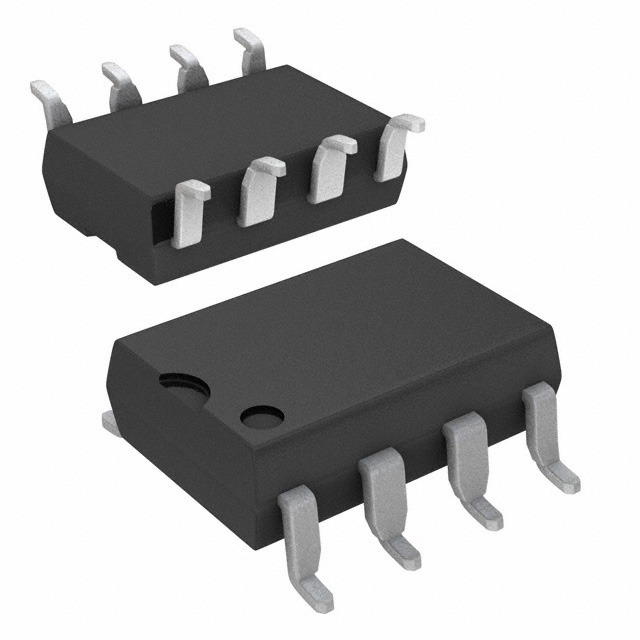
HCPL-3120-300E vs STGAP2SICDTR Gate Driver Comparison
1. Quick verdict
For isolated gate driving in single-channel, moderate-current applications with legacy board designs, the HCPL-3120-300E is a solid choice due to its optical isolation and 2.5A peak drive capability. For higher current demands, dual-channel functionality, faster switching, and compact modern layouts, the STGAP2SICDTR’s capacitive coupling, 4A drive strength, and faster propagation delay make it better suited, especially in multi-phase or more complex topologies.
2. Spec comparison table
| Spec | HCPL-3120-300E | STGAP2SICDTR | Notes |
|---|---|---|---|
| Technology | Optical Coupling | Capacitive Coupling | Optical provides proven galvanic isolation; capacitive offers lower propagation delay and smaller package. |
| Number of channels | 1 | 2 | STGAP2SICDTR supports dual channels, enabling half-bridge or multi-phase designs in one IC. |
| Voltage isolation (Vrms) | 3750 Vrms | 3535 Vrms | Slightly higher isolation rating for HCPL-3120-300E; both exceed typical system requirements. |
| Common mode transient immunity (CMTI) | 25 kV/µs | 100 V/ns (equiv. 100 kV/µs) | STGAP2SICDTR’s capacitive technology provides 4x higher CMTI, critical in noisy power stages. |
| Current output high/low | 2A / 2A | 4A / 4A | STGAP2SICDTR can source/sink double the current, allowing faster gate charging and discharging. |
| Peak output current | 2.5A | 4A | Higher peak current on STGAP2SICDTR supports higher di/dt, beneficial for fast switching MOSFETs/IGBTs. |
| Operating temperature range | -40°C to 100°C | -40°C to 125°C | STGAP2SICDTR supports wider temperature range, useful for more demanding thermal environments. |
| Propagation delay (tplh/tphl max) | 500 ns / 500 ns | 90 ns / 90 ns | STGAP2SICDTR has significantly lower delay, reducing dead time and improving switching precision. |
| Pulse width distortion max | 300 ns | Not specified | Undefined for STGAP2SICDTR, but lower propagation delay implies less distortion. |
| Rise/fall time typical | 100 ns / 100 ns | 30 ns / 30 ns | STGAP2SICDTR’s faster edges reduce switching losses but increase EMI risk. |
| Supply voltage output | 15V to 30V | 3.1V to 5.5V | HCPL-3120-300E supports higher gate voltages up to 30V, preferred for IGBTs; STGAP2SICDTR limited to ~5.5V, suitable for MOSFETs. |
| Forward input diode current max | 25 mA | Not specified | HCPL-3120-300E input LED current max is fixed; STGAP2SICDTR uses capacitive coupling—no LED forward current. |
| Package type | 8-DIP Gull Wing (SMD) | 36-BSOP (7.5mm width) | STGAP2SICDTR’s smaller footprint benefits compact designs; HCPL-3120-300E uses larger, legacy DIP style. |
| Mounting type | Surface Mount | Surface Mount | Both SMT, but STGAP2SICDTR’s smaller package eases high-density layouts. |
| Approval agencies | CSA, UR | UL, VDE | Both have safety approvals; STGAP2SICDTR covers more global standards. |
| Logic supply voltage | Not specified | 3.1V to 5.5V | STGAP2SICDTR logic supply is tightly defined; HCPL-3120-300E logic supply not explicitly stated. |
| Thermal resistance junction-to-ambient | Not specified | 52 °C/W | STGAP2SICDTR datasheet lists this; no data for HCPL-3120-300E—likely higher due to package size. |
| Switching frequency max | Not specified | 1 MHz | STGAP2SICDTR rated for up to 1 MHz switching; HCPL-3120-300E typical use is lower frequency due to slower edges. |
| Voltage output supply max | 30 V | 26 V | HCPL-3120-300E supports slightly higher output voltage, useful for IGBTs. |
| Storage temperature range | Not specified | -50°C to 150°C | STGAP2SICDTR supports wider storage range. |
| Junction temperature max | Not specified | 150°C | STGAP2SICDTR supports higher junction temperature. |
| Isolation voltage transient (VPEAK) | Not specified | 5 kV typical, 6 kV min surge | STGAP2SICDTR isolation withstand voltages exceed HCPL-3120-300E ratings. |
| Package leads | 8 SMD Gull wing | 36 BSOP (32 leads) | STGAP2SICDTR has more leads for dual channels and features. |
3. Design trade-offs
The HCPL-3120-300E uses optical isolation, which is mature and well understood, with proven isolation reliability and robustness against high-voltage transients. However, optical coupling inherently limits switching speed and increases propagation delay, with 500 ns maximum delay and 100 ns rise/fall times. This makes it less suitable for high-frequency or fast-switching MOSFET gate drive applications. The package is physically larger (8-DIP Gull Wing) and may constrain compact PCB layouts.
In contrast, the STGAP2SICDTR uses capacitive coupling isolation, which enables significantly faster switching (90 ns max propagation delay, 30 ns rise/fall times) and higher common mode transient immunity (100 kV/µs vs 25 kV/µs). This translates to better EMI performance and more precise timing for synchronous gate drive control. Dual channels in a single package reduce BOM count and simplify board layout for half-bridge or multilevel inverter topologies.
From a gate drive perspective, STGAP2SICDTR doubles the peak output current capability (4A vs 2.5A), facilitating faster charging/discharging of gate capacitances, minimizing switching losses and improving efficiency at higher switching frequencies (up to 1 MHz). However, its output supply voltage max is 26 V (typical 15.5–26 V UVLO threshold), compared to 30 V for HCPL-3120-300E, making the latter better suited for IGBTs or high-voltage MOSFETs requiring higher gate voltages.
Thermally, the STGAP2SICDTR’s smaller 36-BSOP package with a 52°C/W junction-to-ambient thermal resistance demands careful thermal management at high current loads, but the lower propagation delay and higher drive current may reduce switching-related heating overall. The HCPL-3120-300E’s package and construction likely yield a higher thermal resistance but lower switching losses due to slower edges.
Cost-wise, the HCPL-3120-300E’s single channel and older package type may be more expensive in volume, especially when multiple channels are needed. The STGAP2SICDTR integrates two drivers, reducing part count and PCB area, potentially lowering system cost and complexity.
4. Use-case fit
Choose HCPL-3120-300E when…
- You need a single isolated gate driver channel with high isolation voltage (3750 Vrms) and proven optical isolation reliability.
- Your application uses IGBTs or MOSFETs requiring gate drive voltages up to 30 V.
- The switching frequency is moderate (<100 kHz) where slower propagation delay and switching edges are acceptable.
- The design allows for a larger 8-DIP footprint or legacy board compatibility.
- Regulatory approvals CSA and UR are prioritized over UL/VDE certifications.
Choose STGAP2SICDTR when…
- You require two isolated gate driver channels in a single package for half-bridge or multi-phase topologies.
- Switching frequencies approach or exceed 100 kHz, benefiting from faster 90 ns max propagation delay and 30 ns rise/fall times.
- High common mode transient immunity (100 kV/µs) is necessary due to noisy switching environments.
- Gate driver peak currents of 4 A are needed for fast MOSFET/IGBT gate charging and discharging.
- Compact PCB real estate is a priority, and a smaller 36-BSOP footprint is preferred.
- Operating temperature range up to 125°C (junction) or 150°C (storage) is required.
5. Drop-in compatibility
The HCPL-3120-300E and STGAP2SICDTR are not pin-compatible nor footprint-compatible. The HCPL-3120-300E is an 8-pin DIP-style package with a single channel and optical coupling input/output structure. The STGAP2SICDTR is a