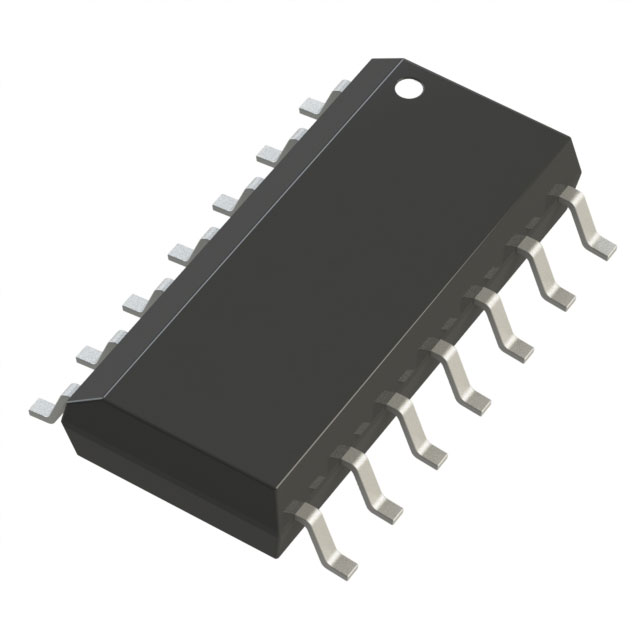
Key Specs
| Spec | Value | Condition | Source |
|---|---|---|---|
| Control Features | Frequency Control, Soft Start | Digi-Key | |
| Duty Cycle | 70% | Digi-Key | |
| Fault Protection | Current Limiting, Over Temperature, Over Voltage, Short Circuit, UVLO | Digi-Key | |
| Grade | - | Digi-Key | |
| Internal Switch S | No | Digi-Key | |
| Mounting Type | Surface Mount | Digi-Key | |
| Operating Temperature Range | -40°C ~ 85°C (TA) | Digi-Key | |
| Output Isolation | Isolated | Digi-Key | |
| Package Case | 14-SOIC (0.154”, 3.90mm Width) | Digi-Key | |
| Qualification | - | Digi-Key | |
| Supplier Device Package | PG-DSO-14-800 | Digi-Key | |
| Supply Voltage (Typ) | 85V ~ 265V | Digi-Key | |
| Switching Frequency (Typ) | 30kHz | Digi-Key | |
| Topology | Flyback, Secondary Side SR | Digi-Key | |
| Voltage Breakdown | 500V | Digi-Key |
When To Use
-
85–265V AC mains input → isolated 12V @ 1A: The 500V voltage breakdown rating combined with isolated flyback topology suits universal input voltages with margin for line surges. Using a non-isolated synchronous buck controller here risks catastrophic failure from mains-to-output shorts and safety hazards.
-
Secondary-side synchronous rectification in isolated power supplies: The device’s secondary side SR control and integrated fault protections like over-voltage and short-circuit detection minimize damage during load faults. A non-protected isolated flyback controller would be vulnerable to thermal runaway or latch-up under transient conditions.
-
Systems requiring soft start with frequency control at moderate switching frequencies (~30kHz): The integrated soft start and frequency control features help reduce inrush current and EMI, stabilizing startup behavior. A synchronous buck with fixed frequency and no soft start could cause overshoot and shoot-through during power-up.
When Not To Use
-
Output current >5A in isolated flyback: The secondary-side synchronous rectification and fault protection are not designed for high current loads beyond typical flyback outputs. Use a multi-phase buck controller instead to distribute current and reduce thermal stress.
-
Applications requiring switching frequencies >500kHz for minimal magnetics: The typical 30kHz switching frequency is too low to shrink transformer size effectively. Use a high-frequency buck controller to enable smaller inductors and capacitors.
-
Low voltage drop, noise-sensitive post-regulation (<1V differential): The device’s flyback topology and switching nature generate ripple unsuitable for clean low-noise rails. Use an LDO regulator for noise-critical post-regulation with minimal voltage differential.
Application Notes
-
The switching node (SW) pin must be routed with low inductance and minimal loop area to avoid high-frequency ringing that can trigger false fault detection or EMI issues.
-
Pins 3 and 10 are noise-sensitive control inputs; they require careful filtering and should be shielded from SW node noise with local ground guards and proper decoupling.
-
Maintain a solid, low-impedance ground plane under the device to prevent voltage offset and improve thermal conduction, especially since package thermal ratings are tight at 85°C TA max.
-
The device’s fault protection circuitry can latch off during transient surges; include a manual or automatic reset mechanism in your controller logic or power sequencing.
-
Keep the sense resistor and feedback components physically close to the device to minimize parasitic inductance and noise pickup, ensuring stable current limiting and UVLO operation.
Gotchas
-
[Soft Start Misinterpretation]: Assuming soft start eliminates all inrush current issues regardless of load conditions leads to startup overshoot if output bulk capacitance is large. Symptom: output voltage spike beyond rated limits during startup, causing downstream device stress. Fix: Verify soft start ramp timing with actual load and adjust bulk capacitance or add pre-charge circuitry.
-
[Fault Protection Latch Without Visible Cause]: Noise spikes on the switching node can falsely trigger short-circuit or over-voltage protection, causing unexplained latched shutdown. Symptom: device appears dead after power-up with no load fault present. Fix: Add RC snubbers on SW pin, improve layout to reduce high dV/dt coupling, and verify fault reset sequencing.
-
[Incorrect Ambient Temperature Assumption]: Operating close to the 85°C TA max without accounting for board-level heating leads to thermal derating not covered in the main spec table. Symptom: intermittent thermal shutdown under high load. Fix: Measure actual board temperature near device during worst-case conditions and derate load accordingly.
-
[Secondary Side Current Sense Noise]: Placing the current sense resistor too far from the device or using high-ESR capacitors in the output filter causes unstable current limit triggering. Symptom: erratic switching frequency and output ripple, sometimes triggering false over-current trips. Fix: Use low-ESR output capacitors and keep sense resistor wiring short and twisted to minimize noise pickup.