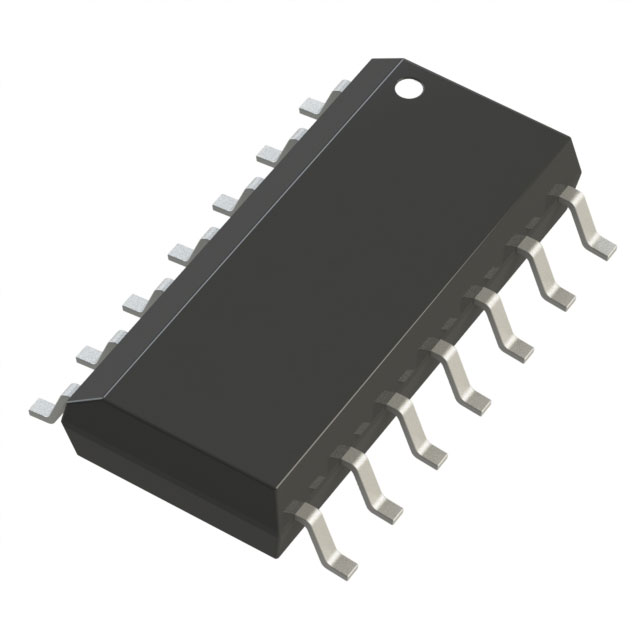
Key Specs
| Spec | Value | Condition | Source |
|---|---|---|---|
| Control Features | Frequency Control, Soft Start | Digi-Key | |
| Duty Cycle | 70% | Digi-Key | |
| Fault Protection | Current Limiting, Over Temperature, Over Voltage, Short Circuit, UVLO | Digi-Key | |
| Grade | - | Digi-Key | |
| Internal Switch S | No | Digi-Key | |
| Mounting Type | Surface Mount | Digi-Key | |
| Operating Temperature Range | -40°C ~ 85°C (TA) | Digi-Key | |
| Output Isolation | Isolated | Digi-Key | |
| Package Case | 14-SOIC (0.154”, 3.90mm Width) | Digi-Key | |
| Qualification | - | Digi-Key | |
| Supplier Device Package | PG-DSO-14-800 | Digi-Key | |
| Supply Voltage (Typ) | 85V ~ 265V | Digi-Key | |
| Switching Frequency (Typ) | 30kHz | Digi-Key | |
| Topology | Flyback, Secondary Side SR | Digi-Key | |
| Voltage Breakdown | 500V | Digi-Key |
When To Use
Use the CYPAP211A1-14SXIT in isolated flyback power supply designs requiring secondary side synchronous rectification with a switching frequency around 30kHz and an input supply voltage range of 85V to 265V. Its integrated fault protections and soft start with frequency control make it suitable for compact, surface mount power supply modules operating within -40°C to 85°C ambient temperature. Avoid using this part in applications requiring internal switching elements or operation beyond 500V voltage breakdown; for those, consider a device with integrated switches or higher voltage ratings.
When Not To Use
-
>3 A output current load: The internal control and secondary-side SR configuration are not designed for high continuous output currents above typical flyback secondary ratings. Use a multi-phase buck controller instead for higher current capability and better thermal distribution.
-
Battery-powered systems requiring ultra-low quiescent current: This part’s quiescent current is not optimized for μA-level sleep modes, risking premature battery drain. Use a low-IQ PFM buck for better standby efficiency.
-
Applications needing switching frequencies above 500 kHz for reduced magnetics size: The fixed 30 kHz switching frequency limits size reduction and dynamic response. Use a high-frequency buck controller in these cases.
Application Notes
The secondary side synchronous rectification node switches at the device’s 30kHz typical switching frequency and requires the smallest possible loop area to minimize EMI and switching losses. The fault protection and control pins are noise-sensitive and should be routed away from high-current switching nodes. Given the device’s internal protections and operating temperature range, a heatsink is generally not required under typical load conditions; however, verify thermal dissipation at the maximum ambient temperature of 85°C to ensure reliable operation.
Gotchas
-
Mistake: Designing circuits expecting an internal power switch.
Failure Mode: The device does not switch current internally, causing the power stage to remain inactive.
Fix: Use an external power switch or MOSFET as per the flyback topology requirements since the CYPAP211A1-14SXIT does not include internal switching elements. -
Mistake: Operating the device above the specified ambient temperature range (-40°C to 85°C).
Failure Mode: Thermal stress leads to premature device failure or unpredictable fault triggering.
Fix: Ensure adequate thermal management and confirm the operating environment stays within the specified temperature range; consider heatsinking or airflow if necessary.