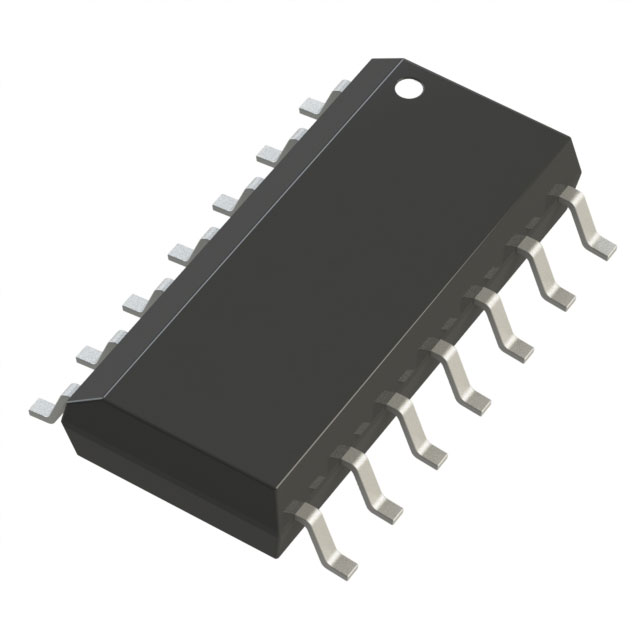
Key Specs
| Spec | Value | Condition | Source |
|---|---|---|---|
| Control Features | Frequency Control, Soft Start | Digi-Key | |
| Duty Cycle | 70% | Digi-Key | |
| Fault Protection | Current Limiting, Over Temperature, Over Voltage, Short Circuit, UVLO | Digi-Key | |
| Grade | - | Digi-Key | |
| Internal Switch S | No | Digi-Key | |
| Mounting Type | Surface Mount | Digi-Key | |
| Operating Temperature Range | -40°C ~ 85°C (TA) | Digi-Key | |
| Output Isolation | Isolated | Digi-Key | |
| Package Case | 14-SOIC (0.154”, 3.90mm Width) | Digi-Key | |
| Qualification | - | Digi-Key | |
| Supplier Device Package | PG-DSO-14-800 | Digi-Key | |
| Supply Voltage (Typ) | 85V ~ 265V | Digi-Key | |
| Switching Frequency (Typ) | 30kHz | Digi-Key | |
| Topology | Flyback, Secondary Side SR | Digi-Key | |
| Voltage Breakdown | 500V | Digi-Key |
When To Use
Use the CYPAP211A1-14SXI in isolated flyback converter applications requiring secondary side synchronous rectification with a switching frequency of approximately 30kHz and an input supply voltage range of 85V to 265V. It is well suited for designs needing robust fault protection features such as current limiting, over temperature, over voltage, short circuit, and UVLO, with a typical duty cycle of 70%. Avoid using this device in non-isolated power supplies or applications requiring internal switching elements, as it does not include an internal switch. For such applications, consider integrated power stage ICs with internal MOSFETs.
When Not To Use
-
Non-isolated point-of-load from 12V bus: The isolated flyback topology and 14-SOIC package are overkill and add unnecessary complexity; plus, the part does not include internal switches. Use a synchronous buck controller instead, which handles non-isolated step-down efficiently.
-
High-current (>5A) DC-DC conversion: This part’s current limiting and package thermal dissipation are insufficient for high output currents. Use a high-current synchronous buck with external FETs to safely handle higher loads with appropriate thermal management.
-
Battery-powered sensor requiring ultra-low quiescent current: The internal control features and switching frequency imply higher standby current than allowed for battery-sensitive applications. Use a low-IQ PFM buck designed specifically for μA-level sleep modes.
Application Notes
The primary switching node is on the secondary side synchronous rectifier, which requires minimizing loop area to reduce switching losses and EMI. Pay special attention to the gate drive pin, as it is noise-sensitive and must be routed with careful layout to avoid false triggering. Due to the absence of an internal switch and the device’s efficient fault protections, a heatsink is generally not required within the operating temperature range of -40°C to 85°C ambient. However, thermal management should always be verified under actual load conditions.
Gotchas
-
[Ignoring temperature derating above 85°C TA]: The part’s operating temperature maximum is 85°C ambient, not junction. In designs with poor airflow or high PCB thermal resistance, junction temperature can exceed limits leading to thermal shutdown or accelerated degradation.
Fix: Verify junction temperature via thermal simulation or actual measurement; add heatsinking or forced airflow if exceeding 85°C ambient. -
[Assuming internal current limiting protects against transformer saturation]: The internal current limit acts on the synchronous rectifier side, but transformer primary saturation can still occur if the flyback reset is insufficient, causing distorted current waveforms and excessive EMI.
Fix: Calculate and verify transformer reset time and inductance; do not rely solely on current limiting for magnetic design protection. -
[Layout placing feedback or control pins near the SW node]: Coupling from the high dv/dt switching node into sensitive feedback pins causes jitter, false shutdown, or erratic duty cycles, manifesting as output ripple or instability.
Fix: Route sensitive traces on a separate layer, use ground shielding, and keep distance from SW node. -
[Startup with no minimum load]: The part may fail to start or enter hiccup mode if the output load is too light because the secondary-side synchronous rectifier control relies on load current to maintain regulation.
Fix: Add a minimum load resistor or dummy load during startup to guarantee proper operation.