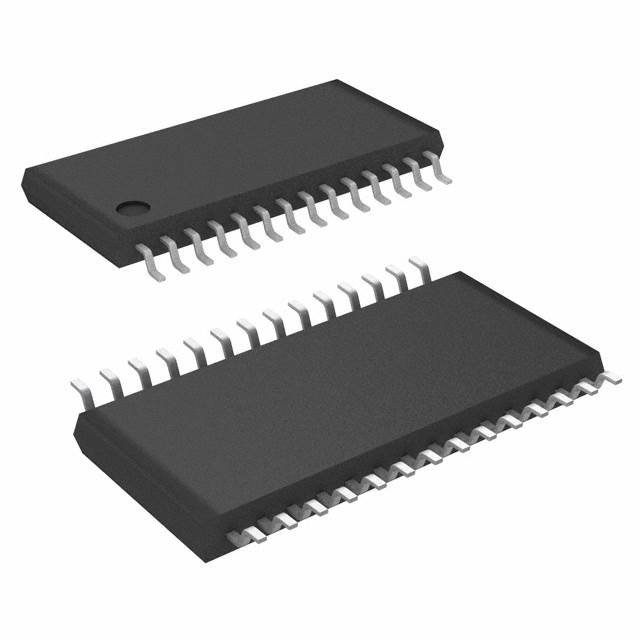
Comparison of Infineon 6ED003L02F2XUMA1 vs Allegro A89103KEVSR-3 Gate Driver ICs
Quick verdict
For high-voltage half-bridge gate drive applications requiring integrated 3-phase control and moderate switching speeds, the Infineon 6ED003L02F2XUMA1 is the better choice due to its higher maximum bootstrap voltage and faster rise/fall times. For automotive-grade, floating high-side MOSFET drive with extended supply voltage range and AEC-Q100 qualification, the Allegro A89103KEVSR-3 offers superior ruggedness and flexibility, especially when non-inverting input logic is preferred.
Spec comparison table
| Spec | 6ED003L02F2XUMA1 | A89103KEVSR-3 | Notes |
|---|---|---|---|
| Channel Type | 3-Phase | 3-Phase | Equivalent; both target three-phase motor drive or inverter systems. |
| Current Peak Output Source/Sink | Not specified | Not specified | Unknown; cannot compare output drive strength directly. |
| Driven Configuration | Half-Bridge | Floating | Infineon is a half-bridge driver; Allegro is floating high-side driver. Floating config is more flexible for bootstrap driving. |
| Gate Type | IGBT, MOSFET (N- and P-Channel) | MOSFET (N-Channel) | Infineon supports both IGBT and P-Channel MOSFETs, expanding application scope. |
| High-Side Voltage Max Bootstrap | 620 V | Not specified | Infineon supports up to 620 V on high-side bootstrap, enabling higher voltage applications. |
| Input Type | Inverting | Non-Inverting | Logic polarity differs; system-level input logic design must be adjusted accordingly. |
| Logic Voltage VIL / VIH | 1.1 V / 1.7 V | 0.8 V / 2 V | Allegro has lower VIL but higher VIH; Infineon has tighter logic thresholds, possibly more noise immune. |
| Mounting Type | Surface Mount | Surface Mount, Wettable Flank | Allegro’s wettable flank QFN package improves optical inspection and solder joint reliability. |
| Number of Drivers | 6 | 3 | Infineon integrates twice the number of drivers, reducing component count for 3-phase systems. |
| Operating Temperature Range | -40°C to 125°C (TJ) | -40°C to 150°C (TA) | Allegro supports wider ambient temperature, beneficial for automotive or harsh environments. |
| Package Case | 28-TSSOP (0.173”, 4.40 mm Width) | 28-VFQFN (6x6 mm) Exposed Pad | QFN package has better thermal performance and smaller footprint than TSSOP. |
| Rise / Fall Time Typical | 60 ns / 26 ns | 1.2 µs / 150 ns | Infineon offers significantly faster rise time, impacting switching losses and EMI. |
| Supplier Device Package | PG-TSSOP-28 | 28-QFN (6x6) | Package differences affect thermal dissipation and PCB layout. |
| Voltage Supply Range | 13 V to 17.5 V | 4.5 V to 85 V | Allegro supports a much wider supply range, allowing use in higher voltage systems or variable rails. |
| Qualification | Not specified | AEC-Q100 | Allegro is automotive qualified, important for reliable operation under automotive stress. |
Design trade-offs
The Infineon 6ED003L02F2XUMA1 is designed primarily for half-bridge applications with integrated 6-driver channels, ideal for three-phase motor control or inverter designs. Its high-side bootstrap rating of 620 V allows use in systems up to this voltage without external level-shifting or isolated supplies. The relatively low supply voltage range (13–17.5 V) means it assumes a dedicated gate supply rail, typical in industrial drives. The faster rise and fall times (60 ns rise, 26 ns fall) reduce switching losses and improve efficiency, but can increase EMI unless layout and gate resistor values are carefully optimized.
In contrast, the Allegro A89103KEVSR-3 is a floating gate driver IC with a non-inverting input and a wide supply voltage range from 4.5 V to 85 V. This wider supply margin allows it to be used in battery-based or automotive systems with variable or high-voltage rails without additional level shifting. The slower rise time (1.2 µs) is a trade-off for better EMI control and reduced voltage overshoot on the MOSFET gate, which can enhance device reliability in noisy automotive environments. The package—a 28-pin QFN with wettable flanks and exposed pad—offers superior thermal dissipation compared to the Infineon’s TSSOP, potentially lowering junction temperature under similar power dissipation.
The input logic polarity difference is significant. Infineon’s inverting inputs require firmware or hardware inversion, while Allegro’s non-inverting logic aligns with many microcontroller or inverter control schemes, simplifying signal routing. The Infineon device’s support for IGBTs and P-channel MOSFETs broadens its applicability to different power transistor types, whereas Allegro focuses solely on N-channel MOSFETs, which are standard in automotive and battery-powered applications.
Thermal management considerations favor the Allegro device in high-temperature or automotive environments due to its extended ambient range (-40°C to 150°C) and package thermal advantages. The Infineon’s tighter logic input thresholds may offer better noise immunity in electrically harsh industrial environments but at the cost of reduced input flexibility.
Cost-wise, the 6ED003L02F2XUMA1 integrates double the driver count, potentially lowering BoM and assembly costs for complete three-phase systems. However, the Allegro device’s automotive qualification (AEC-Q100) can justify a higher cost for safety-critical applications.
Use-case fit
Choose 6ED003L02F2XUMA1 when…
- You are designing a 3-phase inverter or motor drive system requiring integrated 6 half-bridge drivers in a single IC, minimizing component count.
- Your application voltage is up to approximately 600 V, leveraging the 620 V bootstrap voltage rating.
- You need fast switching to improve efficiency and reduce switching losses in industrial or renewable energy inverters.
- Your gate drivers must support IGBT or P-channel MOSFET devices, expanding semiconductor options.
- Your system logic is designed for inverting gate driver inputs or you are willing to implement inversion in control firmware.
Choose A89103KEVSR-3 when…
- Your design requires automotive-grade qualification (AEC-Q100) and extended operating temperature up to 150°C.
- You need a floating gate driver with a very wide supply voltage range (4.5 V to 85 V), suitable for battery systems or high-voltage rails without additional level shifting.
- You prefer non-inverting input logic to simplify firmware and signal routing.
- Thermal dissipation is critical and you want a QFN package with wettable flanks and exposed pad for improved assembly inspection and heat transfer.
- You are driving only N-channel MOSFETs and do not require IGBT or P-channel MOSFET compatibility.
Drop-in compatibility
These parts are not pin-compatible or footprint-compatible. The Infineon 6ED003L02F2XUMA1 comes in a 28-pin PG-TSSOP package with a different physical outline and pin assignment than the Allegro A89103KEVSR-3’s 28-pin 6x6 mm QFN package. Additionally, the input logic polarity differs (inverting vs non-inverting), and the driven configuration (half-bridge vs floating) is fundamentally different. Substituting one for the other would require PCB redesign, re-routing, and firmware changes to accommodate logic inversion and driver configuration changes.
Alternatives to consider
- Texas Instruments UCC37322: A popular half-bridge gate driver with high peak current and fast switching, suitable for industrial motor drives.
- ON Semiconductor NCP51820: Floating high-side driver optimized for automotive applications with AEC-Q100 qualification.
- Microchip MCP14A0602: Single-channel gate driver with high peak output current and wide supply range, useful for discrete driver implementations.