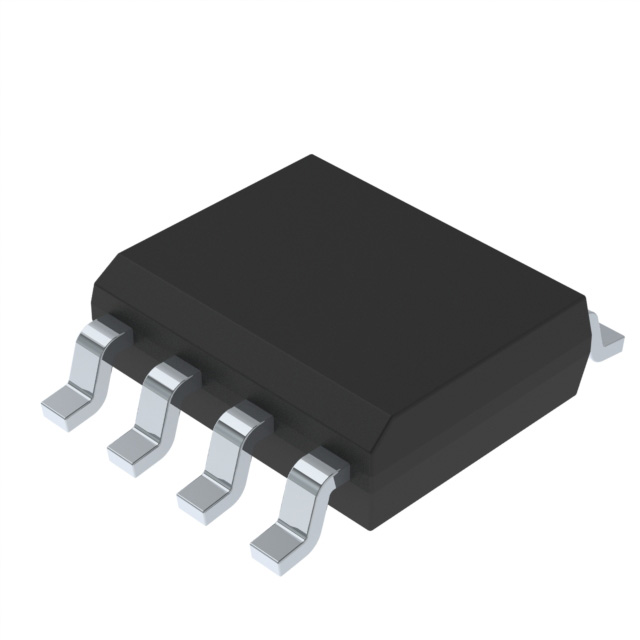
Comparison of STGAP2SICSANCTR vs 1ED2147S65FXUMA1 Gate Drivers
Quick verdict
For isolated, high-voltage SiC MOSFET gate driving with galvanic isolation and automotive qualification, the STGAP2SICSANCTR is the stronger choice due to its 4.8 kV isolation rating, capacitive coupling technology, and AEC-Q100 qualification. For high-side gate driving in 650 V Si IGBT or MOSFET applications, especially where integrated bootstrap diode and fault detection features matter, the 1ED2147S65FXUMA1 offers better system-level integration and protection, albeit with lower isolation voltage and no automotive grade.
Spec comparison table
| Spec | STGAP2SICSANCTR (STMicro) | 1ED2147S65FXUMA1 (Infineon) | Notes |
|---|---|---|---|
| Number of channels | 1 | 1 | Equal |
| Output peak current (source/sink) | 4 A / 4 A (typ, @25°C) | 4 A / 4 A (typ) | Equal peak drive current capability |
| Supply voltage range | 3.1 V to 5.25 V (logic supply); Gate drive up to 26 V | 7.2 V to 22 V | Infineon supports higher supply voltage, enabling higher gate drive voltages |
| Isolation voltage (galvanic) | 4.8 kV galvanic isolation; 2830 Vrms rated | No galvanic isolation; 650 V blocking voltage offset | ST part has far superior isolation, critical for high-voltage systems |
| Package type | SO-8 (8-SOIC) | PG-DSO-8 | Different package footprints, not pin compatible |
| Package dimensions (L x W) | 6 mm x 3.9 mm (typ) | 8.1 mm x 4.1 mm (typ) | ST package is smaller footprint, tighter |
| Operating temperature range | -40°C to 125°C (TJ) | -40°C to 125°C (TJ) | Equal |
| Qualification | AEC-Q100 Automotive | Not qualified | ST suitable for automotive |
| Common mode transient immunity (CMTI) | 100 V/ns | Not specified | ST provides guaranteed CMTI |
| Propagation delay (input to output) | 30–80 ns typical | 55–80 ns typical | ST slightly faster turn-on/off delays |
| Rise/fall times | 30 ns / 30 ns (typ) | 12 ns / 12 ns (typ) | Infineon has faster switching edges, better for high-speed switching |
| Output voltage range | -12 V to +26 V (max gate voltage) | Up to 22 V supply voltage | ST supports negative gate voltage for SiC MOSFET gate control |
| Input logic thresholds | 0.58·VDD to 0.7·VDD (typ ~ 2/3 VDD) | VIH=2.4 V, VIL=0.8 V | ST supports TTL/CMOS inputs at 3.3/5 V logic; Infineon requires higher logic voltage |
| Input bias current | 30–60 µA (typ) | Not specified | Low input bias current reduces input drive power |
| Quiescent supply current (operating) | 1.3–1.9 mA | Not specified | ST datasheet provides power consumption data |
| Standby quiescent current | 400–700 µA | Not specified | ST supports standby mode |
| Undervoltage lockout (UVLO) | 13.8–16.4 V (gate driver supply) | 7.2–22 V supply with UVLO thresholds ~7.2 V typical | Infineon supports wider supply voltage range with UVLO |
| Clamp voltage threshold | 1.3 V to 2.6 V (typ 2 V) | Not specified | ST internal clamp protects gate drive output |
| Clamp current | 4 A to 5.5 A (typ 100 mA clamp current at 220 mV) | Not specified | ST offers gate clamp to limit voltage overshoot |
| Maximum switching frequency | Up to 1 MHz | Not specified | ST datasheet specifies switching frequency limit |
| Input to output operative voltage | ±1200 V | 650 V blocking voltage offset | ST suitable for applications requiring high isolation voltage |
| Human Body Model ESD | 2 kV | 2 kV | Equal |
| Charge device model (CDM) ESD rating | Not specified | 1 kV | Infineon rated for 1 kV CDM |
| Fault detection and clear timer | None | Integrated with programmable fault clear timer | Infineon offers fault detection features |
| Bootstrap diode resistance | Not applicable | Low R bootstrap diode integrated | Infineon includes bootstrap diode, simplifying bootstrap circuit |
| Application focus | SiC MOSFET isolated gate driver | High-side gate driver for SiC MOSFET, IGBT | Different target applications |
| Mounting type | Surface Mount | Surface Mount | Equal |
| Package pitch | 6.7 mm | Not specified | ST has defined suggested land pattern |
| Thermal resistance junction-to-ambient | 123°C/W max | Not specified | ST provides thermal data |
| Safe operating area upper limit | Not specified | 15 V | Infineon limited to 15 V supply |
| Fault reporting output | No | Yes | Infineon integrates fault output pin |
| Input type | TTL/CMOS compatible | Non-inverting | Infineon input logic type specified |
Design trade-offs
The most critical difference between these two devices is isolation. The STGAP2SICSANCTR offers galvanic isolation rated at 4.8 kV, which is essential for driving high-voltage SiC MOSFETs in power stages where safety and noise immunity are paramount. This isolation comes from capacitive coupling technology, which reduces parasitic capacitance and improves common mode transient immunity to 100 V/ns, making it suitable for fast-switching SiC devices in automotive and industrial environments.
In contrast, the 1ED2147S65FXUMA1 does not provide galvanic isolation but supports gate drive voltages up to 22 V with an integrated bootstrap diode and built-in fault detection and clear timers. This makes it well-suited for half-bridge or high-side driver applications where isolation is managed externally or not required, and system-level protection features are beneficial. The Infineon device supports a wider supply voltage range (7.2 V to 22 V), allowing more flexibility in driving IGBTs and MOSFETs with gate voltages above the typical 15 V limit of the ST device.
Thermally, the ST device specifies a thermal resistance junction-to-ambient of 123°C/W maximum, which is relatively high, reflecting its small SO-8 package and isolated design. The Infineon part does not specify thermal resistance but is slightly larger in package size (PG-DSO-8) and offers faster rise/fall times (~12 ns vs 30 ns for ST), which can reduce switching losses and EMI but may require more careful layout to avoid high dv/dt noise coupling.
From a layout and system integration perspective, the isolated ST driver simplifies the power stage by removing the need for external isolation components, reducing board complexity in high-voltage designs. However, it requires careful placement of the bypass capacitor (recommended 1 µF) and attention to the isolation gap, as well as consideration of the maximum switching frequency (up to 1 MHz).
The Infineon part integrates fault detection and bootstrap diode internally, which reduces external component count and improves system robustness. Its logic thresholds require higher logic levels (2.4 V VIH), which may necessitate level shifting if driven from 3.3 V logic. The faster switching edges (12 ns rise/fall) can improve efficiency but increase EMI risk if layout is not optimized.
Cost-wise, the ST device is automotive qualified (AEC-Q100), making it a better candidate for automotive and harsh environment designs, potentially commanding a premium. The Infineon part, lacking automotive qualification and isolation, may be less expensive and better suited for industrial or commercial applications where isolation is handled differently.
Use-case fit
Choose STGAP2SICSANCTR when…
- Designing isolated gate drive stages for 1200 V SiC MOSFETs in automotive traction inverters requiring AEC-Q100 qualification and 4.8 kV isolation.
- Your design demands high common mode transient immunity (100 V/ns) to handle fast switching edges and noisy environments.
- Isolation and safety standards compliance (e.g., UL approval) is mandatory, and space is constrained (SO-8 package).
- You need negative gate driving voltage capability (down to -12 V) for SiC MOSFET gate control to reduce switching losses and improve reliability.
- The switching frequency is up to 1 MHz, and you require tight control over propagation delay and pulse width distortion.
Choose 1ED2147S65FXUMA1 when…
- Implementing high-side gate driving for 650 V Si IGBTs or MOSFETs in industrial motor drives or power supplies where isolation is managed externally or not critical.
- You want integrated bootstrap diode and fault detection with programmable fault clear timer to simplify design and improve diagnostics.
- Faster switching edges (12 ns rise/fall) are needed to optimize switching losses and switching speed in lower voltage applications.
- Your system logic operates at 5 V or higher logic levels compatible with VIH=2.4 V and you do not require negative gate drive voltages.
- Cost and board complexity reduction by integrating bootstrap and fault features is a priority